Showing posts with label authentic work. Show all posts

Service Learning, Educating the Heart

Guest post by Willyn Webb


I have seen service learning turn at-risk youth into contributing, giving, happy citizens who have a solid set of values and are ready to pursue college or career success.  Service Learning is a set up for success in many ways.  
Here are a few:  

  • The great feeling that just comes from doing something good for someone else (increased self-esteem)
  • The perspective that just comes from seeing others that are more needy in some way than you (insight),
  • The learning that just comes from creating a project and following it through (task completion, life skills, reading, writing, math, speaking, etc).  
My recent ed chat with the group Do It Yourself Learning / Homeschooling / Unschooling / Uncollege made it clear how easy service learning can be.  Regardless of the age, skills, or learning/school choice of the involved students, you can just start with just a few simple questions:  
  1. Where do you see a need?  
  2. What are you thankful for?
  3. What would you like to be different?
  4. What could you do to start?
1 - Where do you see a need?
Talking with students about the needs of others is a valuable conversation.  It can begin with a neighborhood field trip, the viewing of TV programs of other places, an internet search on hardships, or a simple question of do you know anyone you could help.  Is there something you think could be better (in our home, in our school, community, the world)?  

2- What are you thankful for?
At Delta Opportunity School this often starts with being thankful.  I find that being thankful is somewhat of a lost art.  From my grandmother who always said, “Count your many blessings, count them one by one” to my favorite counseling modality of “Solutioning” I have taught many students that focusing on what works, teaching yourself to see the good (or even ok) parts of each day (even your worst day), and being aware that you have it better than others in some way is the key not only to personal happiness but to seeing how to make things better through service.  

For example, when we are thankful for our health, we can discuss those that do not have their health.  Visits to hospitals and nursing homes are a great way to see just how healthy students are.  Simply smiling and greeting someone who no one has talked to all day makes a difference (in both individuals).  From there service learning projects become evident (see examples below).  Another example, when we are thankful that we are making progress in school, we can discuss those who struggle in school.  Visits to elementary school special education classrooms are a great way to see how much academic progress has been made.  

3 - What would you like to be different?
Once you discuss needs and what young people are thankful for you can discuss how things could be different.  Options include projects like tutoring, playing, cooking, drives, etc.  A concrete example might be when we are thankful that we have food for the day, we can discuss that there are those in our community that do not have enough food.  From there, hunger is discussed and many service projects (those already in existence and those that do not yet exist) can be researched and discussed.

4 - What could you do to start?
Once young people have identified a need in which they want to make a difference, they need to make a plan to start. It might help to begin by discussing the plan, then capturing it in writing, possibly with a timeline and activities.  


EXAMPLES OF SERVICE LEARNING PROJECTS
To follow are examples of various types of service learning projects.

Helping Others Helps You
A couple of fun individual projects that have happened over the years are when a group of boys had a lemonade stand in front of Wal-mart to raise money to fix a bike for a little girl who they knew had had hers vandalized (by one of our own students).  The boys group bonded and took on a totally different reputation, which resulted in better behavior at school and in the community.  

Another group who was doing the NOT (Not on Tobacco) program walked the stairs of the bleachers for an afternoon and took donations for each step, and raised money to buy the cessation product needed for the woman who had come (on her oxygen) to speak to the group about the results of smoking.  These boys were the only group I’ve ever had that really quit smoking and I think it was because of their efforts to help our guest speaker.  Another group picked up cigarette butts in the park next to our school to show the community that they do care and want to keep things nice (the butts were theirs).  These kids started being more consciencience in many ways.

The learning that came from these projects included hazards of smoking, information on COPD, empathy; parts, costs, and repairs; cost-profit-loss accounting on a lemonade stand; biodegradable products and costs to tax payers for workers to clean parks, etc.  It can be big, it can be small, but the same result is there, helping someone else is the right thing to do.  

Here are some ideas for school and home-based programs. Young people need not attend the local school to ask if they could participate in their service learning work.  

SCHOOL BASED PROJECTS
  • Adopt a Grandparent
    • Overview:  Teens are paired with a resident at a local nursing home.  They visit every other week and do puzzles, take walks, and have seasonal crafts/activities around holidays.  The result is everyone feeling great inside.  
    • Preparation:  This program takes very little preparation, simply an arrangement with the facility, health policies determined, and let the kids decide on the activities.  
    • Learning: This program teaches a lot of thoughtfulness, empathy, communication skills, and history (the residents lived it and love to tell).  It allows students to study and celebrate holidays, read out loud, make crafts and enjoy many of the things they like in preschool and elementary school.  It provides perspective on life, a feeling of being able to brighten someone’s day, and gives students appreciation that comes from being themselves.
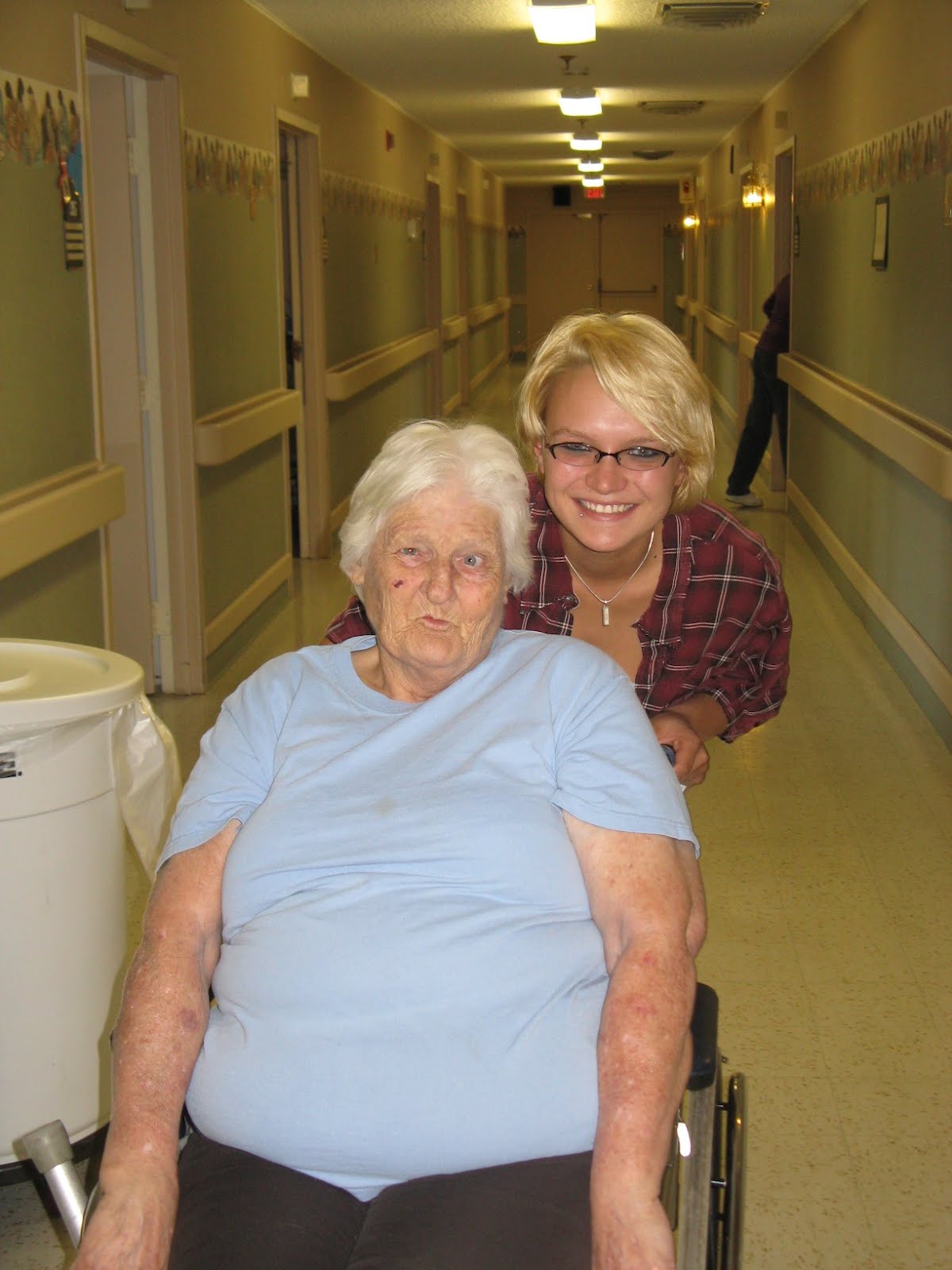
Grandparent visit.  This young lady even went during the summer!

  • Food for Thought
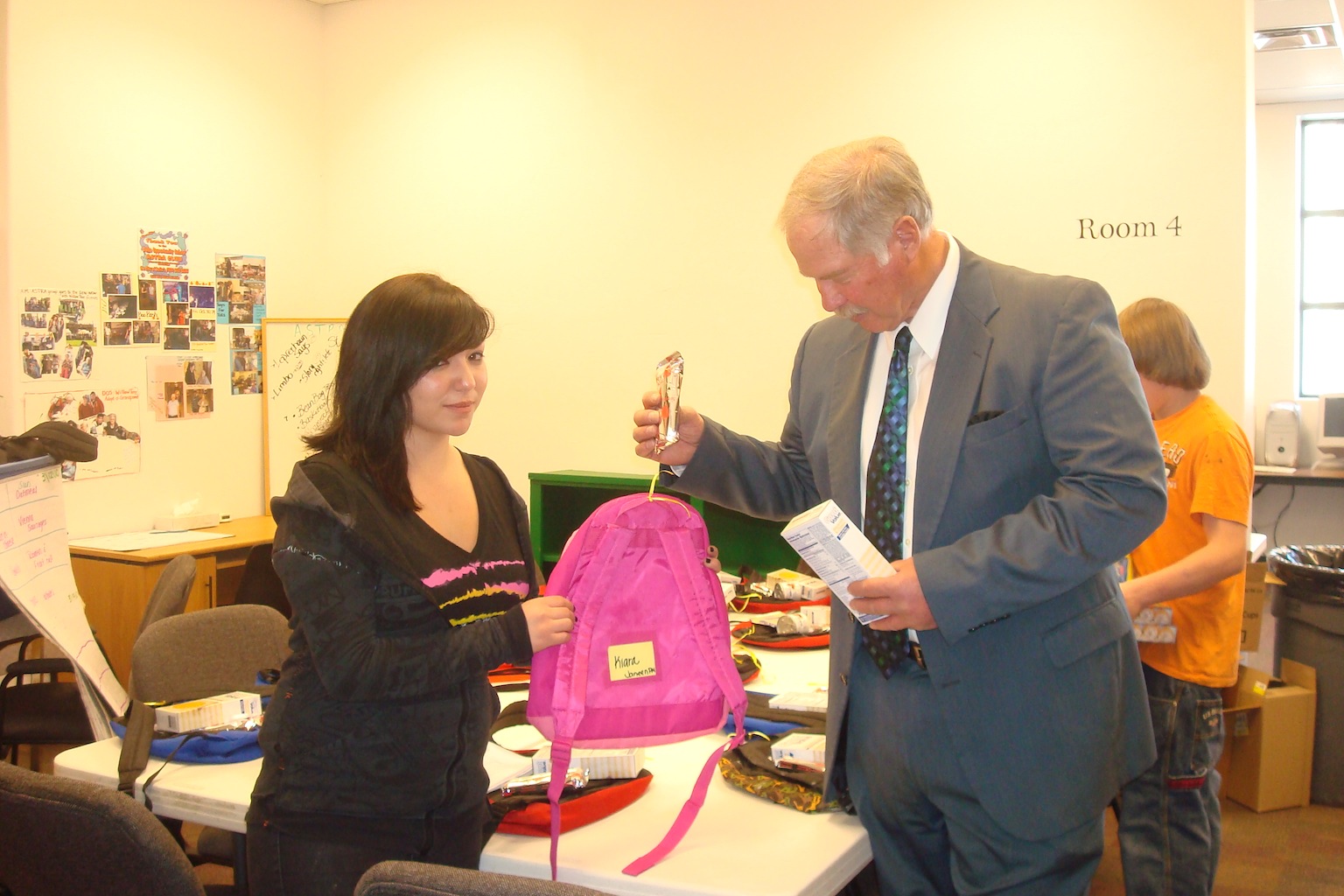
    • Overview: This program is a kids feeding kids long term service project.  With the awareness that there are children (preschool through high school) that do not have enough food on the weekends, they provide backpacks of weekend friendly food (2 breakfasts, 2 lunches, and some snacks) to students who opt into the program (parents sign a permission form, list allergies).  The alternative ed students do all of the fundraising, food drives, speaking to community service groups, budgeting, shopping, meal planning, stocking, inventory, filling, and delivery.  Our school was awarded the “Volunteer of the Year” award by our Chamber of Commerce.  Not many alternative school (no sports or extracurriculars) have a trophy to display!
    • Preparation: Start small with a pilot program.  Do a fundraiser (food drive and/or money) and have a budget.  In our area the contents for each backpack with the weekend food is $4-$5.  Choose a school to serve.  You may want to approach the principal with your idea and either offer to serve a certain number of students for a certain period of time of take on a grade level and invite and see how many you get.  We found that asking teachers to select kids is difficult.  We choose to send the letter home telling about the program and letting families choose to opt their student in or make a donation (making the most of reaching every home).  This may be more risky but we found that when the need is there with a lot of work, the food/money can be raised (grants, civic clubs, etc).  You will need backpacks: new or used work.  We got the local Wal-mart to sell us the left overs from the back to school for $1 each.  For example letters, shopping lists for food, press releases etc, just email Willyn (see address below).  Once the school(s) you serve experience the value of the program, they are a perfect place to have food drives (we make it a competition between the classes and offer a banana split party to the winning class and a gift card to the winning teacher).  That is when it is truly a kids feeding kids program from the ground level on up!  
    • Learning: You can see that they learn a lot of life skills such as public speaking, nutrition, reading ads and shopping wisely within a budget, organization, communication, planning, and writing skills.  The students who receive the backpacks are set up for better learning because they do not need to worry about what they will eat on the weekends and have better nutrition.  Thus the all encompassing name, Food for Thought!  Watching my students deliver the backpacks each week is a joy.  They are so happy to help and the children run for their backpacks, often opening them as they walk back to class, looking in with anticipation.  It is heartbreaking to think a child could be so excited for a pack of oatmeal, some Ramen noodles, Raviolis, poptarts, and a can of peas.  It illustrates the true need and value of the program.  When my students are speaking in from of Rotary, Altrusa, and the Chamber of Commerce, they are proud, productive citizens (whereas for most defending themselves in front of a judge has been their only form of public speaking), it is precious.  They tell their story and share their experience working in the program and they often bring audiences to tears.  They leave Delta Opportunity School with much more than reading, writing, and math.  
For more information on this program, email wwebb@deltaschools.com
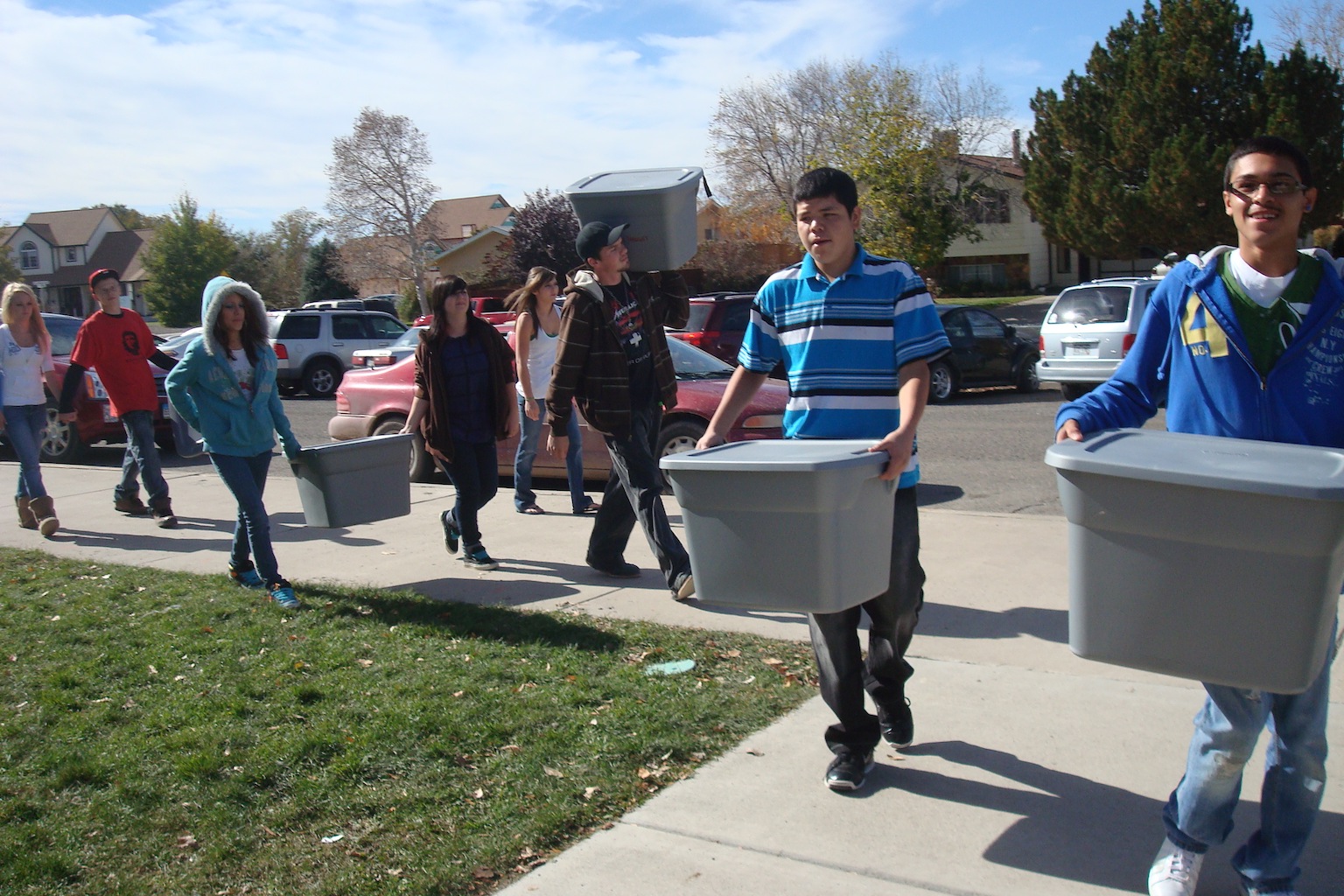
Taking tubs of filled backpacks into school.
Superintendent help fill backpacks.
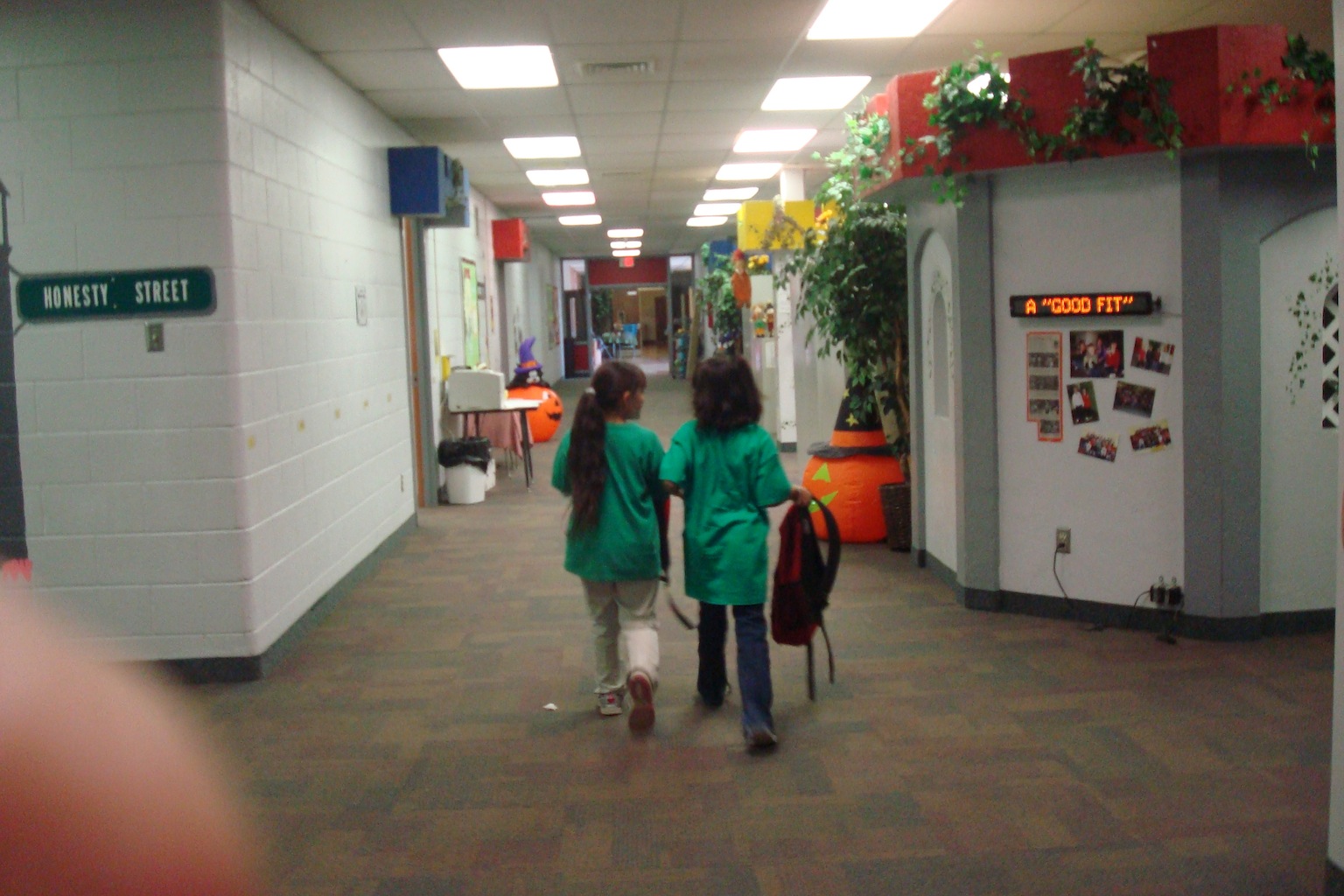
Happy backpack recipients walking away.

HOME BASED PROJECTS
Shoes for Shiprock
Service learning is a mindset.  My own children who have had a mixed experience of public schooling and homeschooling see needs and address them.  My daughter went to a basketball tournament her sophomore year of high school and played a team from the reservation.  Following that game all the questions came into play.  
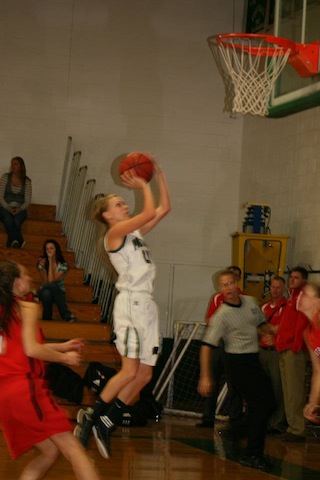
Skylyn Webb, Shoes for Shiprock creator/organizer
  • Where do you see a need?  She came home and shared with me that she was so concerned for those girls, who were playing in old, worn out (not even sports type) shoes.  
  • What are you thankful for? She commented that her old shoes were much better than the shoes that team played in.  
  • What would you like to be different? She wanted to do something about it and after some discussion decided to collect used athletic shoes from her team at the end of the year banquet and send them anonymously to the team in Shiprock.  
  • What could you do to start? She made a sign, shared it with the parents who planned the banquet so it was part of the date-time information sheet, and shipped the shoes.
This year when they played that team she was beaming.  They were wearing the shoes.  The whole team kept quiet and the others never knew it was them who had sent the shoes.  I wanted my daughter to put that on her scholarship application, but she wouldn’t.  That was not why she had done it.  She simply wanted those girls to have better shoes. That is what service learning is all about. Through the process she stepped outside of her comfort zone and talked to the adults, made the posters, packaged, researched the school, learned more about life on the reservation, and shipped the shoes.  There were some life skills in there, but the heart (of all involved) is what was impacted.

The best, most passion-filled projects come from the young people themselves or something near and dear to them.  For example, many of my students had been hungry at times as children and they really get Food for Thought.  My daughter who values good shoes for sports is another example of this.  Start with a love and use it to make a difference for someone else.  Keep it simple and know that what is gained may not be measurable on a test, but makes an immeasurable impact in the lives of others.


Willyn Webb is a busy mother of three girls (10, 13, 17) and the administrator/counselor of another family called Delta Opportunity School where service to others, technological innovation, and a lot of love come together for a great education.  For more information about Willyn and to see her books go to willynwebb.com or @willynwebb.
You have read this article authentic learning / authentic work / service learning / volunteering with the title authentic work. You can bookmark this page URL http://benncam.blogspot.com/2012/02/service-learning-educating-heart.html. Thanks!

Learn Authentically by Giving with KIVA.org

Editor’s note: If your children receive money this holiday season Christeil Figuroa Gota has a great suggestion for how they may want to consider spending some of it while they learn many significant life lessons.


by Christeil Figueroa Gota

People are always talking about bringing education to life, literally, by living their lives and letting their children learn the ins and outs of living in our modern world.  Home Educators and Unschoolers are expert at this.  Those in the conventional education world are sometimes incredulous that simply living ones life is enough of an education for children.  So, I thought I'd take some time to illustrate our paradigm with just one example - Being KIVA Lenders.


My husband and I got involved with KIVA in 2006.  KIVA.org is a non-profit that networks worldwide to provide micro-loans for business and housing.  That sentence alone started a conversation with my children about micro lending and the state of business and housing in the world.  To be a lender, one can start with as little as $25.  You can connect with a borrower anywhere in the world.  Simply log on to Kiva.org and browse by loan type or country.

The loans you give are interest-free and will be paid back to you by each borrower.  No other guarantee is made.  We started with $100 to lend and have added more money to our account each year.  Although you can lend anonymously, we can correspond with the borrowers and they can send messages to lenders.  Their stories are posted as well as updates on their loan repayments and progress. As the loans are repaid, we have an opportunity to re-lend as many times as we want.

Each Christmas, my kids receive a certain amount of money through gifts.  By watching our example, the kids have chosen to lend some of their own gift money on Kiva.  We sit with each child and choose the borrowers that they would like to lend to.  They also follow their borrower's progress periodically throughout the life of the loan.  Lending is a cornerstone of the world's economy and our children now have a firm understanding of the consumption economy from being micro-lenders on Kiva.  

Last May, my 10 year old son chose a borrower named, Esther Gire, from Sudan.  Esther needed a micro-loan to stock her general store.  My son contributed $25 of his money, and along with other Kiva lenders raised the $425 that Esther needed. We tracked Esther's progress online and can see that she is able to repay her loan in increments of $25 per month.   However, this past October, Esther missed her last scheduled payment and is now delinquent for the remaining $10.12 of her loan balance.

Seeing this, my son became curious about the economic climate of Sudan to see if he could determine why Esther is late on her payment.  This led us to discover the awesome, albeit tragic history of Sudan.  At the tender age of 10, my son not only grasps the complexities of micro-financing and world economics, but has now also gained an appreciation for the struggles of families in Southern Sudan, the plight of refugee children and how he has a direct impact on the life of one Sudanese woman trying to rebuild from war.

Of course, one could teach all this math, geography, world history, culture, economics, business and altruism with a few worksheets and a couple hours of homework a day, but I doubt it would have the same staying power.  Plus, my 10 year old in that class would have lost interest in 3 minutes and moved on to get himself in some kind of mischief.  Kiva lending is the alternative that my children chose on their own and with their learner-led interest in the endeavor have gained knowledge and been enriched with the experience.

This month, my son is interested in lending to people with businesses in Jordan and Palestine.  Sharia (Islamic Law) prohibits the inclusion of interest or fees when lending, so we are now also exploring the Islamic Banking System.  A subject increasingly relevant, yet hardly covered in formal higher education, let alone elementary school.  

Let me conclude by saying that although my kids are exceptional for their age in their knowledge of economic systems, it is not something we intended to be so lofty when we started out as Kiva Lenders.  My children simply absorbed mine, and my husband's enthusiasm for lending from our many conversations, and huddles around the computer gazing into the faces of entrepreneurs around the world.  My children love to be lenders because it is something they can do.  Of course they do spend some of their Christmas money on video games and toys, but I can honestly say that lending gives them no less pleasure.

http://www.kiva.org

------------------------
Christeil Gota is mother of 4 boys and unschooling in California. The family is happily embarking on their 4th year of home education, following their passions and playing.
You have read this article authentic learning / authentic work / DIY Learning / homeschooling / math education / unschooling with the title authentic work. You can bookmark this page URL http://benncam.blogspot.com/2011/12/learn-authentically-by-giving-with.html. Thanks!

The Secret To Getting Every Student Excited About Writing

I often lament how infrequent it is that student work is actually published as I did in these two posts.
- Just Say Yes to Publishing! Exposing The Man Behind the Curtain If He’s Still Saying No.
- 21st Century Educators Don’t Say, “Hand It In.” They say, “Publish It!

During a recent outreach to my personal learning network about this issue Susan Ettenheim shed some light on the issue which is close to her heart. Together with Paul Allison, Susan is involved in a site called Youth Voices (a social network where students and teachers work together to create student-to-student conversations and collaborations). She shared this insightful idea which she and Paul had been discussing.

A lot of student writing is of little interest to anyone beyond the teacher.


So, I reflected about my own experience as a writer and teacher of writing and I realized just how on target this insight was. Upon reflection I remember clearly the day I accidentally got extremely reluctant writers enthusiastic about writing. It was 1997 and I was a first year teacher working as a library media specialist. I loved my work. I got to see students all day and help them learn and explore using books, videos, and a lab full of computers I had donated from a company who was upgrading their technology.

On this day Dr. H’s class came to see me. This was a special education class of middle school students in Harlem with below average IQs. Writing was not high on their favorite activities list, yet on this day I had students that were begging for, no, demanding writing mini lessons, engaging in unprovoked peer review, turning to dictionaries and synonym finders, looking up grammar rules, etc. In fact, I just couldn’t pull them away from their writing. Not only that, once I unlocked the key to my new writing enthusiasts, I had them begging to come see me to do more writing all year long...even during lunch, before school, and after school.

So, what got EVERY student so excited about writing?


I helped my students set up email accounts. A revolutionary concept back in 1997 and one that is still elusive in some schools today. I told the students what their email addresses would be and walked them through setting up the accounts with their own passwords. The accounts followed the same format so they easily knew one another’s email address. I had tossed names in a hat to get things started and the students had to write to the person whose name they drew sharing something they either admire about that person or have learned from that person. The person they wrote to should respond in kind.

The next thing I knew I had flying fingers in a silent classroom except for the excited squeal as one student or another was informed, “You’ve got mail.” All the kids were writing to each other and excited as heck when they got mail. They cared what they wrote and wanted it to sound good. Some wrote emails to family members who didn’t live with them and sometimes did not have consistent mailing addresses. Students were able to help their families set up email so they could stay in touch and they knew places in all communities (i.e. the library) where they could access the internet. Sometimes students just wrote to their parents about something that happened n school that day. Students were excited to connect with each other as well as their families like never before and the momentum never died. The rules of written communication followed that of spoken communication and students knew there were consequences for inappropriate behavior. The students didn’t want this privilege taken away and we didn’t have a single issue of misuse.


I then remembered another really popular writing activity. I had a 5th grade class that had a lot of complaints about the school. I invited the students to write a letter that would go to the school principal and district leaders. I wish I had saved this! They all wrote the improvements they’d like to see and submitted those. These became bullets in the letter and as a class we came up with an introduction and conclusion. The letter was sent and a follow up presentation was scheduled to share the student’s proposed ideas.

Both of these writing activities obviously have something in common.
  • They are real.
  • They affect kids lives.
  • They have real audiences.
  • The desire to write comes from the student, not the teacher.
How much of the writing kids do in school has these qualities?

How can we change this?


An idea comes to mind for me. What if we used the real mediums in which kids write to teach literacy in those areas. Perhaps a curriculum could include something like this:

Ten types of writing your students will want to do

  1. Email writing
  2. Facebook updates and comments
  3. Tweeting and replying
  4. Discussion Boards - Replying and initiating topics
  5. Commenting on blogs
  6. Writing a guest post on a blog
  7. Commenting in newspapers or magazines about subjects of interest
  8. Writing an article for a newspaper or magazine about a subject of interest
  9. Writing to persuade someone / some place to do something you want them to do
  10. Writing to teach others how to do something and knowing how to reach those who care
Not every student will want to engage in all of the above types of writing, but what if instead of an artificial curriculum map filled old-style writing that wasn't interactive, we did something different. What if instead we let authentic purpose and passion drive our writing curriculum. What if we let students help decide the kind of writing that is important to them? What if we let students write for reasons they’d need to write in the real world.

While these suggestions might seem to apply to secondary school students only, there is application for younger students as well. In fact my fourth and fifth graders were some of my most avid emailers back in 1997.

However, it seems it may be more difficult to develop authentic writing experiences for younger students, but there certainly are ways. I think back to when I started my blog. Every post had an audience of at least one person in my mind and that was okay. Instead of writing something and emailing it to that person, I wrote something and sent them the link to my blog. Every student has a built in audience beyond the teacher who genuinely cares about what they have to say and that is their friends and family. What if we shifted the idea of teacher as contrived audience and always asked students to think of a real person(s) to think of before they wrote and their writing would be a gift to that person(s). In some cases this audience might also serve as a peer reviewer and someone, other than the teacher, to talk about their writing to. Imagine students talking to their parents, grandparents, siblings, etc. about a piece they’re writing for them. There is a real person who cares. This person in essence also becomes the teacher’s helper and perhaps even an editor for the student. If this person is family, you’re also working to build the home/school connection.

Now, what about the use of social media with young ones? Not possible, right? Well not really. Early childhood students are closely connected to one of the largest group users of social media. Their parents. In fact, this is exactly why first grade teacher Erin Schoening decided to start using Facebook with her first grade students and their families. She has had tremendous success using this platform as a communication tool with students assigned daily to update an authentic audience of families as to what is going on in their class. Ms Schoening and students parents were constant writing guides in helping to share a well-written message to the classes audience.

The key to unlocking writing passion is simple. We must shift our thinking and move from viewing students as people who we are teaching to learn to write and instead move to regarding students as real writers who we are supporting in their craft.

So how will you be doing this with your students this year?
You have read this article authentic work / publishing student work / self publishing with the title authentic work. You can bookmark this page URL http://benncam.blogspot.com/2010/08/the-secret-to-getting-every-student.html. Thanks!

It’s the Innovative Educator Internship. Come and Get It!

I'm taking an idea (and a post) from the Brazen Careerist and looking to find an intern for my blog.

My motivation is two-fold. Of course, I want to offload stuff I don't like to do or have time for on someone who might like to do it. But also, I want to mentor someone and I want to have conversations with someone either in the classroom or closer to the age of the students innovative educators are trying to reach about the topics I write about and should write about. The internship will be a great learning experience, resume builder, and opportunity to make an impact but it will not be a great financial experience: unpaid.


If you don't know that much about what I do, you can get an idea here. You can also find out why I started a blog and my thoughts about the pros and cons of my blogging.


Here's what you will do:


1. Write posts.

You can guest author posts, with my help, which will give you a byline and exposure to an authentic audience of educators.


2. Build your resume and experience.
You will be able to put my blog on your resume as a site that you were responsible to assist with editing, design, layout, content. Through writing your own posts you will begin to develop your own name and following.


3. Update the design, features, and format

This is work that I like but don’t have time to do and don’t consider myself expert in. Update the look and feel. Determine what should really go in the right-hand side bar that would be relevant to my audience.


4
. Research.

Here is the type of stuff I'd like you to help me find:

People who will talk about hunches that I have.
Trends in educational innovation.

People who are writing about topics I write about.


5. Basic editing.
I want you to edit my blog fixing typos, formatting errors, grammar errors, etc.

Getting on board

Who should apply?

Innovative educators and innovative students.

How much time would this involve?

I'd like you to work about 10 - 20 hours a month. You can work whatever hours you want, from wherever you live.
How can you apply?

If you're interested, please email me (found in my profile on the right hand side bar). In the email sell yourself. Indicate your interest and motivation for doing this and some ideas you have for posts, updating, and anything else.


-----------------------------------------------------------------------

Writing credit and inspiration for this post from the Brazen Careerist.

You have read this article authentic work / writing internships with the title authentic work. You can bookmark this page URL http://benncam.blogspot.com/2009/07/its-innovative-educator-internship-come.html. Thanks!