Showing posts with label personal success plan. Show all posts

Transform education by measuring what matters. Hint: It's not test scores.

There’s been a lot of talk about the ethics behind corporations running schools and thus profiting off students. But if we’re really concerned about folks profiting off our kids why aren’t we spending more time focusing on assessment? If we do away with measuring success with test scores the result would be billions saved that could go toward resources and personnel dedicated to support students.

Let’s face it: Teachers know and parents are waking up to the fact that these tests are one of the most expensive and least effective ways to measure student or teacher success. So why are we willing to let the government and policymakers forcibly impose this corporate-driven assessment from companies like Pearson upon our children even if it makes them sick???

What if instead we measured success in things that really mattered to students, parents and teachers.  

For example...

Students have:

  • A plan to find and develop their passion(s).
  • A team of mentors, guidance, and/or advisors to help guide them in discovery and development of their passions.
  • Customized success plans that they help design.
  • Advisors who are deeply involved in and responsible for their lives and their success.
  • An opportunity to learn about what they are interested in the world with real world experts.
  • Reported they are satisfied with support they receive from the school.
  • An authentic portfolio that can be used for career, academic, or civic pursuits.

Teachers and schools are measured by:

  • Success is moving students along to
    • Career
    • College and/or
    • Civic endeavors

that enable them to achieve their plans and goals for personal success.

Pie in the sky?

No.

The ability to do this, do it at scale, and report progress already exists.

Here’s how it works?

Primary Schools
For primary schools it works by incorporating the Schoolwide Enrichment Model and Total Talent Portfolio. In schools incorporating this model students and their teachers know they’ve got talent and they build upon students talents, interests, passions, ability and learning styles.  This method honors the idea that children are more than numbers and data. Instead they use Total Talent Portfolios to help them pursue engaging activities in areas of deep personal interest. The portfolio reveals that our children are unique individuals who are represented by much more than a number but instead what they have done with samples of real work and meaningful work that is not just handed in but worthy of the world. Visit this and this to see what this looks like in action..

Secondary Schools
See how this works for secondary students by checking out Dennis Littky and Elliot Washor’s Big Picture School model. As I reported earlier this year, these schools take on the responsibility of ensuring each student moves on to the college, career, or experience that aligns with their interests and goals and their teachers are evaluated on their ability to help make that happen.  

This is possible. It can be done. It is being done. It is the corporations that are getting in the way with infiltrating our schools with the multi-billion dollar testing industry that is good for politicians and good for business, but we all know this is not good for children and is robbing them of the very resources they need for success.

If we work to move the conversation to measuring success by meeting our student’s personal goals in college, career, and/or life experiences we accomplish these goals:
  • Instead of teaching to the test we teach to the student.
  • Billions of dollars are restored toward resources for students.
  • Schools are held accountable, not for test scores, but for placement in what matters: college, career, and/or civic duty.

Here are three things we can do about this.
  1. Demand this data from schools.
  2. Opt out of tests.
    • There is a group for doing so in every state on Facebook. Find it by searching “Opt out of standardized tests” followed by the name of your state.
  3. Talk to politicians about alternatives.

Let's stop celebrating test scores and accepting the status quo. Our children deserve to be more than a number. They deserve more than to be prepared to be compliant little beings who memorize, regurgitate and fill in bubbles on demand..OR ELSE! Parents and teachers must stand up for what matters for our children. The evidence is not one-size-fits-all tests. Instead let's honoring and recognizing the personalized success plans that are unique to each child and prepare them to move on to the college, career, and/or civic experience that will help them achieve their goals.
You have read this article boycott tests / education reform / personal success plan / standardized tests with the title personal success plan. You can bookmark this page URL http://benncam.blogspot.com/2012/08/transform-education-by-measuring-what.html. Thanks!

Live Tonight! 2/2 - Panel on Personal Learning Profiles

Join me tonight, Thursday, February 2nd, for a live and interactive FutureofEducation.com panel discussion on "Personal Learning Profiles," also referred to as "personal success plans," "learner profiles," or "personalized learning paths."  The discussion will be hosted by Steven Hargadon. Joining me on the panel are Barbara Bray, Kathleen McClaskey, and Shannon Miller.

We'll discuss be discussing topics, issues and questions such as:

  • With a growing sense of the value of personalized, customized, and student-driven learning, what is the best way to capture and communicate students' learning plans and goals?
  • Who should "own" these profiles/plans, both in terms of responsibility and ultimate control?
  • How can and should personal learning profiles interact with student portfolios?
  • And Steve Hargadon's perennial question...In a vision of teachers as lead-learners, what provisions are being made to bring personal learning profiles to the profession itself?

    Session details:
    Date: Thursday, February 2nd, 2012
    Time: 5pm Pacific / 8pm Eastern / 1am (next day) GMT (international times here)
    Duration: 1 hour
    Location: Blackboard Collaborate (formerly Elluminate).
    Log in: Go to http://futureofed.info.
    The Blackboard Collaborate room will be open up to 30 minutes before the event if you want to come in early. To make sure that your computer is configured for Blackboard Collaborate, please visit the support and configuration page. Recordings of the session will be posted within a day of the event at the event page.
    Recordings:
    The full Blackboard Collaborate recording and a portable .mp3 recording will be available soon after the show athttp://www.futureofeducation.com.

    Panelists (listed alphabetically):

    Barbara Bray is a Creative Learning Strategist who believes that anyone at any age can learn. She has worked with schools, districts, individuals, businesses, and non-profit agencies around the world. Her dream has been to create an online place that was safe and secure with all the tools and resources all in one place. She did it with My eCoach as early as 1999 — way before there were blogs, wikis, Twitter or Facebook. Barbara is what you call a “Digital Pioneer.”

    Barbara is a teacher, writer, change agent, risk-taker, instructional designer, connector, and visionary. Whenever anyone told Barbara she couldn’t do something, she took it more like a challenge. Barbara knows that teachers need support with the shift to 21st Century Skills. New and veteran teachers are overwhelmed with day-to-day tasks plus being asked to teach and integrate technology. The big question even today is “how do you fit everything in that is expected of you and meet the needs of all students?”

    Barbara writes a regular column on professional development for OnCUE (Computer Using Educators) as well as regularly posts helpful materials and resources on her blog. She works tirelessly to find and research new tools and methods that help educators. Now with multiple opportunities to network using social media and join various online communities, teachers and learners are confused. Barbara makes it her job to determine what is authentic, valid, cost-effective, safe, user-friendly, and relevant for her clients.

    Kathleen H. McClaskey, resident of Ed Tech Associates, is a recognized UDL and Digital Learning Consultant with 28 years experience in using technology in the classroom. Kathleen is a frequent international, national and regional workshop presenter on topics that include Universal Design for Learning (UDL), Technology for Diverse Learners, Math and Technology: Bringing Research to Practice, Built in Moodle: The Universally Designed Digital Learning Environment and most recently, Personalized Learning Toolkit with Barbara Bray. In the last decade, she directed and designed the professional development in technology-based projects in math, science, literacy and autism. She currently curates four topics in Scoop.it:  Personalized Learning, Universal Design for Learning, Leveling the Playing Field with Apps and Math, Technology and UDL:  Closing the Achievement Gap.  Twitter: @khmmc

    Shannon McClintock Miller is the district teacher librarian and technology specialist at Van Meter Community School in Van Meter, Iowa. She encourages her students to have a voice while learning, creating, collaborating, and connecting to others within their school and around the world. Shannon is the author of the award winning Van Meter Library Voice blog and enjoys writing for ISTE's Leading & Learning journal, various blogs, and in other forums. She has had the opportunity to speak in Iowa and around the country about advocacy, technology, social media, and making a difference in education and the lives of others. She is a member of ISTE, SIGMS, ALA, AASL, and ILA (Iowa Library Association). Shannon serves as the advocacy chair on the Iowa Association of School Librarians and on the Iowa Center for the Book Advisory Council as the public school students and libraries representation. Shannon also serves on the School Library Month advisory board. She is a StudyBlue Teacher Advocate and FableVision Learning Ambassador. In 2010, she was also chosen to be part of the Cengage Learning/School Library Journal New Leaders Program. In March 2011, Shannon was awarded the Connecting People Shorty Award. Shannon can be found at @shannonmmiller on Twitter and online atshannonmmiller.com.

    Lisa Nielsen writes for and speaks to audiences across the globe about learning innovatively and is frequently covered by local and national media for her views on “Passion (not data) Driven Learning,” "Thinking Outside the Ban" to harness the power of technology for learning, and using the power of social media to provide a voice to educators and students. Ms. Nielsen has worked for more than a decade in various capacities to support learning in real and innovative ways that will prepare students for success. In addition to her award-winning blog, The Innovative Educator, Ms. Nielsen’s writing is featured in places such as Huffington Post, Tech and Learning, ISTE Connects, ASCD Wholechild, MindShift, Leading and Learning, The Unplugged Mom, and is the author the book Teaching Generation Text.
    You have read this article DIY Learning / personal success plan with the title personal success plan. You can bookmark this page URL http://benncam.blogspot.com/2012/02/live-tonight-22-panel-on-personal.html. Thanks!

    What should every citizen know? My Answer.

    What should every citizen know? That was the topic of a conversation that passionate educators were grappling with at this year’s Educon. Educators got to work quickly to make their case for what they felt must absolutely, positively be included (visit this link to see some of the thinking). Some educators went as far as to outline when each person should acquire the knowledge they believed was most important.

    A math educator shared…
    math students would need to know to think critically. They need this math just to function in the world and do things like balance their checkbook, cook, and tell time.
    ·         A history teacher shared…
    what every citizen should know is American history and how it relates to that of other countries as well as have an understanding of the political system and how issues become law.
    ·         The English teachers explained…
    why their subject was the most important if citizens wanted to be able to understand, communicate, and share ideas.
    ·         There  were science teachers who told us…
    science was of utmost importance because we would never know how our world and universe works without an understanding of science
    ·         There was also discussion around topics like empathy and compassion…
    because we need to ensure there was a good dose of that mixed in too. But how since it’s not a subject? Maybe modeling.
    ·         That prompted a conversation about the importance of knowing religion and the bible…
    which is the foundation of much of what made America the country it is today. 
    ·         Then, was an educator who shared that we shouldn’t be teaching the subjects in isolation…
    We need to teach thematically!

    There was a lot of head nodding in response.

    This moment reaffirmed for me that my beliefs about learning often make me feel like I’m in a foreign land.

    How is it that other people should have the right to decide what everyone should know? Why does everyoneneed to know all the same things? Do people really think we need to know all these things to be successful? When we have so many (too many) things is it any wonder we've forced teachers to teach to the test? Do we really believe a free and democratic society has the right to tell others what they need to know or should such a society provide the “opportunity to choose to learn?”

    It came as no surprise to those who know me (thank you to the wonderful conversation orchestrator, Dan Callahan) that I was given the go ahead to blurt out: 

    “’WE’ don’t all need to know all these things and anyone could be perfectly fine, and even successful, without them.”

    “Not true!” someone said and he explained why he thought a citizen must know each of these things. 

    It was at that point I shared something that many educators are afraid to reveal…

    I KNOW VERY LITTLE OF WHAT THE EXPERTS (AND THESE EDUCATORS) SAY I NEED TO KNOW.

    I expected the response I got when I revealed this.  While there were some that understood, and even agreed with where I was coming from, there were others whose answers, understandably, helped justify their existence and their jobs.

    I was told, “No! That’s not true.  You know things. You just don’t realize you know them.” I appreciate their belief in me, but the truth is… I do not. I used to be embarrassed by this. I mean, I spent more than a dozen years in the school system and I excelled! I was an honors student who started college at age 15, while I was in high school, and graduated college at the top of my class when I was 19…but the truth is, during that time, I learned nothing that was important for success in my life. Wasted years lost to a system that could have been spent with more meaningful pursuits.

    Instead, I was forced to take classes from teachers who used the "sit n git," "memorize n regurgitate (onto a test or into an essay or project meant for the class, not the world)" method of learning. As a result I don’t know the science, math, history, or the religious foundation everyone said was necessary for an informed citizenry.  In fact, I have no doubt I would fail the standardized high school tests given in my state on each of those topics today. I do happen to be a proficient reader, writer, and user of technology, but that is despite, not because of, school.

    I pushed further asking, “What about all the people who, like me, don’t learn from teachers talking, textbooks, or tests?   

    Some of the responses to that were predictable. We need to expose students to these things or they will never know about them. My response: “Schools don’t expose. They impose.” It is one thing to expose people to a variety of wonderful possible choices. But that is not what we’re really doing. Instead, there is a curriculum that students are forced complete in a standard and often boring way at a time that doesn’t honor the student’s readiness, interests or include any of the elements that lead to effective learning for many of us. What’s more, there is often little to no explicit connection made to their real worlds. 

     Ugh.

    I realized I was sort of derailing the conversation and felt thankful that I was in an environment where this was okay and even welcomed. Sadly, though when we discuss what an informed citizenry should know, even innovative educators often revert to the familiar content areas and carry on about why the one they are responsible for (or passionate about) is of utmost importance. This mindset is supported in our current climate.

    We have Common Core
    with the not so secret agenda to federalize education with a national curriculum
    with the not so secret reality that political interests drive the Core
    with the not so secret agenda of being pushed by corporate greed to produce compliant workers and dutiful consumers created
    with the not so secret agenda of publishersand testing companies who are positioned to make a bundle off what we make teachers force these kids to do.

    We have become a society that is quick to follow orders of a government that imposes their agenda into families dictating how all our children must be raised. Teachers and parents are going along with this, even though many realize what they do is hurting children.  The government imposes force in the form of "do what we say (such as teach to and take the tests) or we’ll cut off funding" and the sheep are forced to follow.  We’ve become a top down nation where our president wants to force young people tostay in school until they’re 18. This makes a nice sound bite for the naïve, but the informed know that he is not addressing the problem. Most young people leave school because it has little to no relevance to their lives. Students are seen as numbers and data, not human beings . If school is so wonderful, why make it compulsory? Why must we force people to go there rather than ensure it is a wonderful place that people want to attend? 

    We now have the common core standards designed to push EVERY child down the same narrow path to college, even though it is necessary only for few, and the mentality has cost us to lose due respect for many. This decision however will result in huge profits to the government via the student loan scheme (our next bubble to burst). It’s ironic when many of our nation’s founding fathers, our nation’s leaders, and our most successful businessmen never graduated college themselves.

    The conversation came to an end with the usual, well, there’s a lot more to figure out and discuss and we won’t be able to come up with all the answers in one workshop.

    I disagree. This is not a new conversation. The answers are right in front of us. It’s just that many of us are not ready or willing to see them.

    People are not widgets and no one should try to coerce individuals to become part of a Stepford citizenry. Our students are rebelling with dropout rates at 33% nationally and around 50% in large cities like Las Vegas, New York and Chicago.  Our teachers are sick and tired of being forced to engage in a test-based curriculum that lines the pockets of publishers while killing the passion and creativity of students. Many of the good ones have left or are leaving.

    An informed citizenry is made up of many people. Every person does not have to hold all the knowledge that a group of strangers thinks is important for their success in moving through the conveyor belt at the same rate and exiting on the same date.


    We need to stop with the force, coercion and imposition of knowledge upon others. We must give people the freedom and trust to pursue the learning that “they” value as important. We need to spend some time learning more from the unschooling community and Democratic schooling environments where we’ll find out that when given choice and provided with necessary resources, along with a supportive and caring environment, people will discover and learn what they need to know for "their personal success."  This all comes without force, coercion or even traditional teachers, tests, textbooks or classrooms.

    We need to stop trying to figure out what everyone needs to know and let our nation’s young people take ownership and make decisions about what they want to know. 

    We must move away from the industrial model of testing for the standardization of students when they get off the end of the school conveyor belt and move toward customization of what each individual chooses for their own personal success.

    The role of the educators in a building must move from imposing knowledge to inviting curiosity, discovery, and providing support in helping young people determine an individualized plan for success.

    Personal success does not mean participating in a system that creates a bunch of standardized cogs who meet the manufacturer’s specs.   

    It means we must realize one-size-fits-all really only fits some and strips the uniqueness and creativity from most. We want more than turning our children into processed and manufactured cogs in a system that sees them simply as uniform producers of data to be analyzed and tested in ways that reap huge profits for those providing and measuring a one-size-fits few solution to an informed citizenry.   

    It means providing environments where the mechanics, farmers, game designers, home builders, stunt people, Olympic snowboarders, artists, adventure travel operators, soldiers, football coaches, television directors, winemakers, talk show hosts, poets, firemen, chefs, restaurant owners, wildlife conservationists and more (note college degree not required for any of the aforementioned) can have the freedom to discover and explore a customized learning experience that honors and respects them as the successful individuals that they have the potential to become. It’s time we stop trying to produce graduates that all look the same and are prepared to follow the herd and start empowering young people to discover, choose, and pursue their own paths.
    You have read this article #educon / education reform / personal success plan with the title personal success plan. You can bookmark this page URL http://benncam.blogspot.com/2012/01/what-should-every-citizen-know-my-answer.html. Thanks!

    Could The Key to Teacher Effectiveness Mean Dropping Certification Requirements?


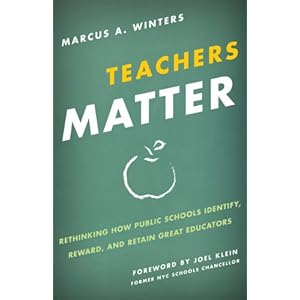
    Teachers Matter: Rethinking How Public Schools Identify, Reward, and Retain Great EducatorsMarcus A. Winters explained that there is no correlation between certification and teacher effectiveness at a recent Manhattan Institute for Policy Research event held to announce the publication of his new book, “Teachers Matter.” Winters went on to propose the idea of  removing the barriers to becoming a teacher, suggesting that since there is no correlation between certification and teacher effectiveness, anyone with a college degree should be given the opportunity to teach if they are able to find someone to hire them. The fact is that many of us who went through teacher preparation and certification programs know they were not very helpful when it comes to the realities of the classroom. It is no surprise then that such certification has little impact on student success.

    I think Winter’s idea deserves some attention, particularly in the case of secondary studies, but I wonder why he believes that a college degree should be required. If you are an expert in your field, chances are you may have reached this success without such a degree. Especially, if we consider experts who may be interested in taking up teaching upon retirement from their career. Academic inflation is only a recent phenomenon. Historically the majority of careers i.e. business, programming, entertainment casting or directing, writing, advertising, photography, art, etc. did not require such certification for success.


    When it comes to college, the jig is up. As the college grads who are occupying Wall Street and other places are happy to tell you, their degree often does little to prepare them with the skills they’ll need for success in a number of careers today. So, let’s take the college degree out of the equation too.

    What if instead of requiring individuals to jump through certification hoops, we filled our secondary schools with real-world photographers, journalists, scientists, businesswomen, and others. These people also might not necessarily be employed full-time at the school. Instead, they may perhaps teach a class or two each semester.  They may take on the important charge of connecting students with mentors in their field, helping them grow their personal learning networks, and supporting them in acquiring apprenticeship and/or internship opportunities.  

    For this vision to be effective, we’d need to do something that Winters didn’t give much attention.  We’d need to seriously change traditional evaluation of secondary schools, educators, and students and align it to evaluation metrics used in the field the student was interested in studying.  Instead of grades, students could meet challenges aligned to the real-world needs of their potential future careers. Such challenges might be what lands a student an internship or apprenticeship opportunity.  Perhaps to demonstrate mastery students earned badges that could be earned in a number of meaningful ways, chosen by the students.  Students, educators, and schools, could be assessed on how successfully they acquired such badges.  Additionally, depending on student learning goals, assessment could be further tied to schools if they supported students in reaching their personal success plans that honored not only students interested in an academic track, but also those interested in pursuing a vocational track as they do in countries like Finland.  

    When it comes to secondary school, as long as teachers aren’t measured the same old way...with outdated, disconnected, bubble tests, I think Winters might be on to something.
    You have read this article assessment / college myth / personal success plan / teacher assessment with the title personal success plan. You can bookmark this page URL http://benncam.blogspot.com/2011/12/could-key-to-teacher-effectiveness-mean.html. Thanks!

    Preparing Students for Life-Long Success is Not Preparing Students for Long Bubble Tests

    Unfortunately, in the 21st century education reform has equated to measuring a school’s ability to produce good test takers. But think about it. In real life there are few if any tests to be taken. More than a decade into the 21st century and I have yet to take a test and I don’t envision any being in my future either. How did we get to a point in America where we’re measuring schools by their success in forcing students to waste their time being good at something few will ever need to do in real life?  Could it be that this meaningless time waster is doing exactly what it was designed to do?  
    1. Line the pockets of testing companies and publishers who are good at following the money, but know this does little to prepare students for success.
    2. Produce compliant young consumers who are good at believing, memorizing, and regurgitating what they are told without questioning authority.


    For some it is hard to imagine anything different or better.  There are tools however, like Personal Success Plans or Project Foundry that help schools provide a personalized, learner-centered approach that tracks performance-based assessment and values real world skills.  There are also tools like OurLearningfolio that help home learners and their families do this.  What these tools do is help learners identify their passions and interests and help them engage in real-world, authentic activities to develop them while also providing a framework for measuring success. Completion of an activity doesn’t simply result in a letter grade. Instead it becomes part of an authentic online portfolio that can be used to attain academic or career goals.  

    Rather than demanding schools produce good test takers, parents and their children should support schools in moving from being memorization and regurgitation machines and moving toward customizing learning in meaningful ways that produces personalized results that are valuable to individual learners. 


    Fortunately, there are schools that are moving in this direction.  Here are some of them:
    Here is a video sharing a student perspective of this type of learning.  

    Providing students with a say in how and what they are learning should be a right, not a privilege. While the video shows a model that is a vast improvement over traditional school, I’d like to see more authenticity.  Rather than present to a class, present to the real audience. Rather than having the teacher provide assessment, have a real-world expert do so. I’d also suggest the student website be created outside the school learning management system.  This should be owned by the student created on a platform of their choosing that can stay with them for life.  
    How are you helping your school move from an environment of preparing students for life long success rather than long bubble tests?  Project Foundry, Personal Success Plans, and authentic portfolios are the type of tools that can help schools move in the right direction.  
    You have read this article ePortfolios / personal success plan / project based learning with the title personal success plan. You can bookmark this page URL http://benncam.blogspot.com/2011/11/preparing-students-for-life-long.html. Thanks!

    iCould Should Be Essential Component of Your Personal Success Plan

    icould should become an essential component to every student's personal success plan.  The site gives visitors the inside story of how careers work. The icould storytellers relate, in their own words, their real life career journeys. There are over a thousand easy to search,varied and unique career videos as well as hundreds of written articles. From telecoms engineers to police officers, from landscape gardeners to web designers, from engine drivers to zookeepers; they talk about what they do, what it’s like, how they came to be where they are and their hopes for the future. They also share the times they’ve messed up, had difficulties and set-backs as well as their opportunities and experience of achievement and success. The video stories – as well as articles – talk about real issues, such as problems at home, taking a year out, failing exams and coping with redundancy. In addition to being able to look at people via careers, visitors can also look by searching life themes like Making a difference, Apprenticeship, Passion, School stories -negative.

    An essential component of personal success plans is finding heroes and helpers.  Heroes and Helpers are people that students believe inspire them, either the heroes who may be famous and/or helpers in their own lives that they may know personally.  This site provides a treasure-trove of real potential heroes and helpers that they may very well be able to relate to and who may expose them to ideas and possibilities they never knew existed.
    You have read this article personal success plan with the title personal success plan. You can bookmark this page URL http://benncam.blogspot.com/2011/06/icould-should-be-essential-component-of.html. Thanks!

    State Regulations Get In the Way of Teen's Learning

    I recently was at an inner city school in Harlem where students were empowered to work independently making podcasts about topics of deep personal interest.  Stations were set up around the room and students knew what to do and could move through the stations at their own pace.  The children were very proud of their work and the work of their classmates.  I spoke to a student and asked her what she thought about learning this way. She said that she loved working at her own pace because she was no longer slowed down by the teacher and/or class.

    Brycen R. R. Couture, a teen who has opted not to go to school and instead achieve success in the world, expressed a similar sentiment in a recent post on his blog where he complains about state requirements that are holding him back sharing this.  
    When I have to stop living in order to please the State, I don’t feel good about it. It doesn’t feel right. Why should I have to stop living because you tell me I have to prepare for a future that I am living now? I’ve released my first CD at 17 years old, now. I perform my music now. I’ve written a book which is in the editing stage now. I’ve been interviewed for a movie now. I do children’s rights work now. I’ve booked myself on the radio, now. I’m part of NH Media Makers now. I started a club and ran my own business from ages 12-15. I’ve been speaking to the public full of professionals since I was 12. I can’t count how many times I’ve been in the newspaper for my community activism, now. I like to bike, socialize with friends, make chain mail, calculate dice probabilities, invent games, build forts, cook, play Dungeons and Dragons and I have a close relationship with my Mom, all now. I am writing this to New Hampshire now; I’m not waiting around for the future!
    One-size-fits-all assessments work well for easily checking off compliance boxes, but they don't work well for people.  Whether learning from school or learning from life, personal success plans, not standardized compliance tools are what best serve our children.  

    Read Brycen R. R. Couture's Blog at http://brycenrrcouture.blogspot.com
    You have read this article DIY Learning / personal success plan / standardized tests / unschooling with the title personal success plan. You can bookmark this page URL http://benncam.blogspot.com/2011/06/state-regulations-get-in-way-of-teen.html. Thanks!

    Teen Takes Control of Her Own Learning and Opts Out of High School

    Editor's note:  Here is the story of a teen who left school to take control of her learning.  If you're a teen or know a teen interested in opting out, check out The Teen's Guide to Opting Out of School for Success.


    Co-authored by 16-year-old Leah Miller and Lisa Nielsen


    In a world where it seems most every teen is in school, making the decision to opt out can be very difficult. After all, this is an age when most adolescents are trying to do what they can to fit in. Additionally, most people perceive students who leave school as “drop outs” and society has labeled them as lazy, unmotivated, not bright, etc. Students who have taken charge of their learning know this is not true, but the reality is that they will be spending a lot of time convincing others of this. 16-year-old Leah Miller is one such former student who has chosen to opt out of high school so she could acquire an education that was best was personalized to her learning goals.  To follow is her story complete with the presentation she put together to convince her parents she was making the right decision.

    "As a school principal I have one job and that is to expose kids to a whole lot of different things and help them to get their light bulb to go on.”
    --Barbara Slatin, Schoolwide Enrichment Model Principal (read more here)


    Leah Miller - School was dimming my bright light
    I am an unusual case. I hope one day, what I did will be commonplace, but with my circumstances, for now, I remain unusual. I have always been a “good student”. I got straight-A’s, I did my homework without being bribed, I actually enjoyed going to class most days.


    I left school because my inner light was being slowly, but surely, being dimmed. I started dreading school and losing all my motivation for the mundane daily homework I was assigned. It was hell to put myself through the day-to-day activities that I didn’t care a whit about.

    Fortunately, my mom had a great conversation with a friend that led to a discussion about unschooling--the friend had unschooled his three kids. My mom brought it up to me that night and the seed was planted. She didn’t have any agenda when she told me, but as the idea grew inside me, she saw me open like a flower in the dessert finally getting water. We talked to that family as we were deciding to leave. They have become a real support system for me. I left my high school just a few weeks after the initial conversation. My mind was made up, my heart followed and the rest is history. 


    In the beginning, my dad was reluctant and unsure if it was a good decision so I made a Powerpoint presentation (which you can see below) and scheduled a meeting with my parents to help convince them. I took charge of my life and ownership of my learning and left high school right then and there. It was freeing, but also scary.


    I got a lot of different reactions when I first left, and I am still dealing with the repercussions. Some of my friends and family were very supportive and they saw how much better I am doing. Quite a few of my friends still suffering through the school system were jealous. However, quite a few people dear to me were really upset by my decision. I got angry letters and anonymous hate comments on my blog. 

    Unfortunately, I have kind of grown apart from most of my school friends. Thankfully, I had some really close friends from acting school that I still am super close with.


    It was hard to deal with all of the various responses, but I feel that I have learned a lot and grown as a person from this experience. One of the questions I hear all the time is “So, what do you do all day?”. I hate this question. I know that people are just curious and they have every right to want to know more about my unconventional lifestyle. However, that question makes me curl up inside and get that dread feeling in my gut. Sometimes I feel like I am inadequate with what I am doing, but most of the time, I just know that the person asking won’t understand the way I live my life, because society hasn’t caught up with this fast-growing education revolution yet.


    I live my life day by day. I take every opportunity that I can to learn from life. I believe that I am more prepared for real life now than when I was still in the sheltered school environment. I have learned how to handle myself efficiently in real-world situations. I do lots of internships with different theaters. I hope to get a job soon. Because I have so much free time during the school year, I am really interested in travel. I am going to to New York soon for over two weeks to explore and soak in the city. I know that I will learn bucketloads from that trip.


    I plan to apply to Santa Monica College in the fall and take whatever classes I find interesting. After two years, it is really easy to transfer to a traditional four-year campus school. I passed the California High School Proficiency Exam, the California equivalent of a GED for minors. I am thriving as I live my life the way I want to, without having a “formal education” thrust upon me. I am confident that my path will lead to an amazing future, and I can’t wait!

    Listen to Leah’s interview on with The Unplugged Mom.

    Listen to internet radio with The Unplugged Mom on Blog Talk Radio


    About Leah Miller
    Leah Miller is a 16-year old unschooler. She left high school halfway through sophomore year, and now she enjoys her life and learns from everything around her, not in hour-long periods of enforced learning. Her passion is musical theater and she breathes it everyday. She is on a quest to find a better term than “unschooling”. Leah enjoys mismatched socks, driving with the windows open and the music blasting, and baking. She would be very content to never hear the words, “So what do you do all day?” ever again. Leah writes a blog called “said the red-head” and you can also follow her on twitter @LeahMiller28.
    You have read this article DIY Learning / education reform / home education / homeschooled / homeschooling / personal success plan / unschooled / unschooling with the title personal success plan. You can bookmark this page URL http://benncam.blogspot.com/2011/05/teen-takes-control-of-her-own-learning.html. Thanks!