Showing posts with label alternative education. Show all posts

What Parents Really Want to Tell Teachers: What You Do Hurts Our Children

Guest Post by Laurie A. Couture.  This article was originally posted here and shared with permission at The Innovative Educator blog.               
 

Maslow's Hierarchy of Human Needs (Image by Factoryjoe)
Many parents are shaking their heads at the audacity and insolence of the CNN article, What Teachers Really Want to Tell Parents by Disney-and-Oprah-endorsed teacher, Ron Clark. His article is dangerous because it represents how the majority of traditional school teachers view children, parents and teachers’ roles as authorities over children’s lives. In my post, What Teachers Really Need to Hear From Parents, I challenge Ron Clark to consider the dehumanization of children and the undermining of the parent-child bond in the institution he represents.


Most parents in industrialized societies are conditioned by their own schooling to be obedient and unquestioning of their children’s schools and the so-called authorities therein. A frightening majority of parents are unaware that most everything that traditional school teachers do is developmentally inappropriate and even harmful for youth of all ages. However, a growing movement of parents are parenting through awareness, consciousness and connection to their children’s needs. Many of these parents are opting out of public and traditional schools are are seeking refuge for their children in child-centered and democratic schools or through homeschooling and unschooling. 


As a mother of an unschooling teen son, and based on the years of complaints I have heard from parents and their children about traditional schools, I have compiled a list of  concerns and presented them to teachers in the context of their own education:


1. In college and Grad school, Maslow’s Hierarchy of Needs was an elementary principle that you learned. Maslow stated that if basic physical and emotional needs are not met, a child cannot properly attend to higher level functions such as learning. Yet, despite your “education”, you hurt our children’s bodies, emotions, minds and spirits every day in the name of routines, rules and “classroom management”. 

Here’s how:


2. As “trained professionals”, you seem to be ignorant about the basic functioning of the human body. You deny our children their right to eat when hungry, causing their blood sugar to drop and putting them at risk for fatigue, nausea and mood instability. You deny our children their right to use the toilet when needed, causing them intense pain and desperation and putting them at risk for urinary and gastrointestinal dysfunction and damage. You deny them  hydration, causing them to dehydrate and putting them at risk for headaches, mental fog, lethargy and medical problems. You deny our children physical activity at their will, causing them distress and putting them at risk for hyperactivity, challenging behavior, inability to focus and obesity, weakness and medical problems. You also act oblivious as to how preoccupying and awkward sexual development can be in a school setting for our teen boys and girls, putting them at risk for shame, distress and early sexual activity.


3. You are responsible for referring our children to the mental health system to be labeled as “learning disabled”, “mentally ill” and “special needs”. Our children are prescribed  powerful chemicals that alter their natural neurological functioning and do harm to every system of their bodies. You do this rather than deal with the fact that children need touch, movement and play and are not meant to be away from their families all day or learn in the conditions you force upon them. (In 19 states, you actually legally assault our children! It is unconscionable that you have failed to learn from your Master’s-level training that violence physically and psychologically traumatizes children.)


4. Through your studies in college and Grad school you should be aware that  play is the very means by which all mammal children learn. You are aware that children learned for millennia through play and community interaction and that many of our world’s greatest minds were minimally or not schooled. You also observe every day how children long and beg to play and will, at all ages, risk getting into trouble to steal a moment of play. Yet, you refuse to allow our children to do as nature drives them to do- Play, move, jump, run, climb, explore, create and have fun. You seem to take the joy out of everything you give children to do and then you punish them when they act like children.


5. You know that one of the most dreadful times of the day for parents and children is homework time. You know that our children have been cooped up all day, away from their families, homes, friends, the outdoors, our communities and their interests. Yet despite the research that indicates that homework is not beneficial for children, you make our evenings at home a nightmare by forcing our children to do reading, paperwork and projects for you. You seem callous to the tears, tantrums and distress our children suffer every night and the helplessness we feel to be able to give them the time they need to be kids.


6. You are aware from your training that there are at least seven forms of human intelligence and at least three modalities of learning. You are aware that most children, especially our boys, are kinesthetic, hands-on learners. Yet you insist upon keeping children sedentary, all doing the same work, in the same auditory, linguistic or mathematical manner. You are aware that this sets up many children, especially our boys, for failure. You view most of our boys and our children who are artistic, musical, kinesthetic, creative, athletic, introspective, extroverted, quirky or perseverant as underachievers, lazy, learning disabled, mentally ill, behavioral problems or having “ADHD”. You view their passions as “hobbies” that do not count as “academics” and you rule out seeing that their “hobbies” are often more intricately academic than anything you are “teaching”.


7. You take our children away from us. They will be children for less than two decades out of a long adulthood, but you steal those critical years from us. Our children are touch and love starved all day in school. Your academic training taught you the vital importance of parent-child attachment and how a disruption can cause psychological problems. But you disrupt the parent-child bond by infringing upon our family time, causing emotional disconnection to deepen with each year. You subordinate children, causing them to form and focus on toxic peer networks. You can do little to protect our peer-tormented children because you have set yourselves apart from children, like another species. By the time our children are in their mid-teens, they are so depressed, angry and overwhelmed with busywork, pop-culture escapes and peer expectations that society has to write books to try to convince us that “pulling away” is natural in the teen years when in fact, it is not.


8. You talk to us as if you know our children, their needs and what is best for them better than we do. We assure you, you do not! Despite learning about Maslow, Bowlby, Ainsworth, Montagu, Harlow, Gardner and others in college and Grad school and despite your own common sense observations about children, you seem to do everything opposite of what our children need. Then, you gravely misjudge and punish their distress signals and define their humanity by their behavior.  You treat our children without respect, empathy, compassion or love unless they behave according to your rules and expectations. You seem oblivious to their pain, vulnerability and distress.


9. You cause so many of our most creative, spirited children to hate learning and to lose their passion, creativity, interests, motivation and their charismatic or poetic personalities. Everything you expect takes their attention away from what they were born to do. You replace that with some federal agenda to do homogenized work, pass one-dimensional tests and seamlessly usher children into taking their “place” in the economy, either as perpetual students, workers, laborers or drop outs. Children processed by your system have no time to make up all of the living they missed from preschool through high school graduation. From there on, unless they find themselves, they will have a life of perpetual work and consumption until they die.


10. Know that a growing movement is showing us that our children do not have to live this way. There are joyful, free ways for our children to learn; ways they can play, thrive and feel happy, safe and good in their own skin… Ways they can manifest lives of passion, creativity and ingenuity in their own ways… We also want you to know that you do not have to be a part of the school system. If you truly love children, you could help us raise awareness to how the education system harms children. You could work in a democratic school or become a caring mentor to children in need. If you agree with us that the system does not allow you to meet our children’s needs, then work to restore childhood back to our children.


Laurie A. Couture is an unschooling, alternative education and attachment parenting coach and consultant. She is the author of Instead of Medicating and Punishing: Healing the Causes of Our Children’s Acting-Out Behavior by Parenting and Educating the Way Nature Intended which was chosen as a finalist in the ForeWord Magazine Book-of- the-Year Awards in 2009. She appears as an expert in the documentary film, The War On Kids (2009) and is the host of The Free and Joyful Childhood Radio Show. Laurie was a recipient of the 2010 Manchester Union Leader’s Forty Under 40 honors.  Visit her website at http://www.laurieacouture.com.  

Further Reading:
Read the conversation on my Facebook page about this topic here and here.
Read the Adventures in Learning blog reaction to this piece here.
Reactions to Ron Clark's initial piece
Read learning expert Linda Dobson's reaction to Ron Clark, Oprah and Disney here.

You have read this article alternative education / children's rights / compulsory education / DIY Learning / home education / homeschooling / public school / unschooling with the title alternative education. You can bookmark this page URL https://benncam.blogspot.com/2011/09/what-parents-really-want-to-tell.html. Thanks!

Six Reasons I’m excited about homeschooling my future children

(A post from Kate Fridkis, of Skipping School and Eat the Damn Cake)


I grew up without school and my husband grew up with school. I’m twenty-five, and Bear is twenty-six, and sometimes we sit around and talk about the kids we might have someday, because we’re not at all cool, and don’t get invited to any parties. I’m kidding. We get invited to (tons of amazing) parties. And we also talk about our future kids and how they will learn, and what kind of lives they will have. We can make a pretty good case for homeschooling. It may or may not involve a boat. 

Here are a few reasons why homeschooling our future kids will be awesome:

1) We can live anywhere
And then we can move and not worry about the new schools.


2) We won’t have to have the public/private debate
And end up worrying that our kids aren’t in the most advantageous environment if we choose public or that we don’t have any money left if we choose private.


3) We can travel as a family, and it can count as schooling
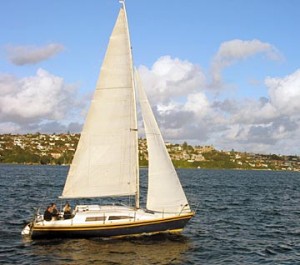
Maybe we can do this on a boat. Boats sound nice in my fantasies. There was that family a while back who sailed around together for a year, and the mom wrote a book about it (of course). I can’t imagine this working very well when I was a kid, because of my brothers. They chased each other around the house a lot. And then the house felt small, even though it was a house. But maybe I’ll have quieter kids. Bear is pretty quiet. And calm. And low key. I’m really, really hoping our kids turn out just like him and practically nothing like me. I also hope they get his nose, because it’s adorable.


(I googled “boat” and got this. Amazing. source)

I was imagining something more like this: (source)

4) My kids can play outside a lot.
Playing outside is like the archetypal thing that future parents imagine their wholesome children doing. So it sounds pretty corny. But it really is great, when you get down to it. I played in a stream for a lot of my childhood. It was amazing. Really. I had so many adventures in that stream. I was so proud of that stream. When it dried up in the dead of summer, I was embarrassed for both of us. It looked so naked and sad and had so obviously failed, and it was mine. When there was a brief flood that caused panic among sheltered New Jersey adults, I snuck outside and forded my raging river stream, bursting with pride and excitement. Dad was very upset when he discovered that I was gone. He was also very upset when I came back, and he got to tell me how upset he’d been.

Maybe my children won’t fall in love with a stream, but I’d like to at least give them the opportunity to do a lot of fun stuff outside.


5) My kids can mess up without it being a big deal.
They can try to learn a really difficult language and then decide they’d rather learn a different one and they can switch over without getting anything on their record. They can get all of the math problems wrong until they get them right, and it won’t even matter. Actually, it’ll just be nice for them not to have records.


6) My kids can hang out with each other.
My readers know how much I love my brothers. Can’t live without those guys. And it’s always been that way. My non-schooled friends have pretty much always been friends with their siblings. And I’ve been friends with their siblings, too. People came in families, not alone. We all belong to our families, whether or not we like it.


Bear and I are in California this week, visiting his family. Sometimes it’s a little heartbreaking, to be on opposite coasts. I wonder how we’ll make it work. I wonder who we’ll have to choose– mine or his. I wonder where our kids will grow up, and which set of grandparents they’ll grow close with. You’re not supposed to put it like that. You’re supposed to say “they’ll be close with both, for different reasons” or something. But it’s much easier to be close with someone you see. Someone you spend more time around. Growing up, I had a primary and a secondary set of grandparents. That’s just the way it works sometimes.


And I don’t want it to work that way for Bear and me and our future children. I want both. I want everything.


My dad says, “That’s not the way life works,” sometimes. He tells me that people settle down. They make certain choices. They build a home.


I think, “People don’t always have to do the thing that people always do.”
I think about spending winters and springs there, summers and falls here. I think about how else it might work. And then I think about how I will homeschool my kids, and I feel relieved. The imaginary structure of my hypothetical future is flexible. 


There may eventually even be room for a boat trip. Who knows.

You have read this article alternative education / DIY Learning / homeschooling / kate fridkis / skipping school / TIE / un-schooled / unschooling with the title alternative education. You can bookmark this page URL https://benncam.blogspot.com/2011/05/six-reasons-im-excited-about.html. Thanks!

Superwoman Was Already Here

By Daniel C. Petter-Lipstein. This post originally appeared on Kate Fridkis's blog Un-schooled.

Superwoman was already here.

And she gave us a superb educational model to end the “Race to Nowhere.”

Her name was Dr. Maria Montessori and in the first half of the 20th century she pioneered and refined the Montessori method of education. Today, there are over 17,000 Montessori schools worldwide including thousands of preschools in the USA and hundreds of Montessori schools in the U.S. at the K-8 level.

My children go to a private Jewish Montessori school in New Jersey called Yeshivat Netivot Montessori. After five years as a parent at Netivot, I now believe quite deeply that it is a national tragedy that Montessori is largely deemed to be an educational option only for privileged kids from families that can afford tuition at a progressive private school.

Millions more American children deserve access to a Montessori education.

There are about 350 public Montessori schools in the United States, a number that is shamefully small.

I am not writing to explain, “What is Montessori?” There are several good books, lots of internet videos and numerous websites to answer that question.

But I do want to offer three reasons* Why I love Montessori and believe that millions more American children could benefit from this extraordinary approach to teaching and learning:

1. Curiosity

In a Montessori classroom, questions matter more than answers and a child’s natural curiosity is welcomed, not shunned.

Newsweek ran an article last summer about America’s “creativity crisis” with this striking paragraph (emphasis mine):

“Preschool children, on average, ask their parents about 100 questions a day. Why, why, why—sometimes parents just wish it’d stop. Tragically, it does stop. By middle school they’ve pretty much stopped asking. It’s no coincidence that this same time is when student motivation and engagement plummet. They didn’t stop asking questions because they lost interest: it’s the other way around. They lost interest because they stopped asking questions.“

(some kids getting all Montessori with shapes. source)

In a Montessori school, this dynamic does not happen because teachers “follow the child” and are always encouraging the kids to ask questions. The Montessori method cares far more about the inquiry process and less about the results of those inquiries, believing that children will eventually master–with the guidance of their teachers and the engaged use of the hands-on Montessori materials which control for error–the expected answers and results that are the focus of most traditional classroom activity.

My daughter’s lower elementary teacher (Montessori classes are typically multi-age, lower elementary is grades 1-3 together) recently told me that a few kids in her classroom were learning about the triangle and they asked “Can a triangle have more or less than 180 degrees?” In classic Montessori style, the teacher turned the question back on them and said, “Use the hands-on geometric materials and try and make an actual triangle that is more or less than 180 degrees.” So the children have their question honored and arrive at the proper answer by themselves.

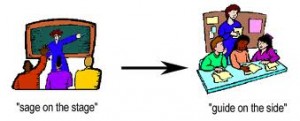
This story also highlights the role of a teacher in a Montessori classroom as being a “guide on the side” rather than the “sage on the stage.”

(can you believe that I found this on the internet? source)

In a world where the amount of information is doubling every 2.5 years (with much of it available at the click of a mouse) and where the top 10 in-demand jobs in 2010 did not even exist in 2004, encouraging kids to ask good questions and giving them life-long tools to investigate those questions is far more important than instructing them on how to produce correct responses. Even if those answers require some level of complexity, they are generally still straight-forward and predictable, which hardly prepares them for a world whose path is increasingly winding and unknown.

The culture of inquiry that is the hallmark of a good Montessori school is also a critical foundation for the creativity and innovation that America will need to compete in the 21st century. In December 2009, the Harvard Business Review published an article called, “The Innovator’s DNA” based on a six-year study of 3,000 creative executives including visionaries likeApple’s Steve Jobs, Amazon’s Jeff Bezos, Ebay’s Pierre Omidyar and Meg Whitman, and P&G’s A.G. Lafley. In an accompanying interview (with two of the three authors of the study) entitled “How Do Innovators Think?”, one of the professors that conducted the study noted (emphasis mine)

“We also believe that the most innovative entrepreneurs were very lucky to have been raised in an atmosphere where inquisitiveness was encouraged. We were struck by the stories they told about being sustained by people who cared about experimentation and exploration. Sometimes these people were relatives, but sometimes they were neighbors, teachers or other influential adults. A number of the innovative entrepreneurs also went to Montessori schools, where they learned to follow their curiosity. To paraphrase the famous Apple ad campaign, innovators not only learned early on to think different, they act different (and even talk different).”

2. No Homework

(source)

Many parents ask themselves, “If my child is spending six, seven or eight hours in school, why does she get so much homework?” If she were alive today, Dr. Maria Montessori would definitely be asking the same question.

My children do not have any daily homework at their Montessori school. While this varies at Montessori schools, most Montessori schools do not give kids any kind of daily homework. They may have research projects or long-term book reports (as do the students at my daughters’ Jewish Montessori school), but no daily homework.

The effectiveness of the Montessori approach usually obviates the need for homework. As one father in our school noted to me, “My 7 year-old was in a traditional school last year and he learns more in a day at this Montessori school than he did in a month at his regular school.” Since children in a high-quality Montessori school learn mostly by doing and by using as many of their senses as possible, in-school time is extremely productive and there is little or no requirement for homework to review and/or build upon their daily in-school lessons.

Without the crushing burden of homework that most American kids face each night, kids in a Montessori school are free to do whatever they like after school: play outside, watch TV, read, participate in sports, etc. The daily emotional battles over homework that most parents know all too well are also largely eliminated.

And homework is a waste of time. The research has shown consistently that homework at the grade school level has virtually no correlation with academic achievement. See this article from Time magazine which summarizes the leading research.

3. Calm and Peaceful Classroom Environment

Good Montessori classrooms have a sense of calm and order that is amazing; a setting where all kids are consistently engaged throughout the day in activities that they find meaningful and fun. We are starting to fully grasp how critical this type of environment is for learning and development, regardless of age. In the past three decades, there has been an explosion of important research that documents the connections between stress levels and the ability of a person to function and thrive, whether it be at home, work or school.

In a wonderful new book called “Brain Rules for Baby” by Dr. John Medina, a brain scientist, some of this research is examined and explored. Dr Medina, in a chapter on how to raise a smart child writes:

“First, I need to correct a misconception. Many well-meaning moms and dads think their child’s brain is interested in learning. That is not accurate. The brain is not interested in learning. The brain is interested in surviving. Every ability in our intellectual tool kit was engineered to escape extinction. Learning exists only to serve the requirements of this primal goal. It is a happy coincidence that our intellectual tools can do double duty in the classroom, conferring on us the ability to create spreadsheets and speak French. But that’s not the brain’s day job. That is an incidental byproduct of a much deeper force: the gnawing, clawing desire to live to the next day. We do not survive so that we can learn. We learn so that we can survive.

This overarching goal predicts many things, and here’s the most important: If you want a well-educated child, you must create an environment of safety. When the brain’s safety needs are met, it will allow its neurons to moonlight in algebra classes. When safety needs are not met, algebra goes out the window. Roosevelt’s dad held him first, which made his son feel safe, which meant the future president could luxuriate in geography.”

In Montessori classrooms, the methodology of engaging with children, the approach of the teachers and the way those teachers are trained all help build and foster this environment of safety where children can learn and flourish.

CONCLUSION

My commitment to my Jewish identity means that my kids need to go to a Jewish school so they can learn deeply about Judaism and their Jewish heritage. Every day I wake up grateful that an awesome Jewish Montessori school exists five minutes from my house in New Jersey.
But I am also an American who loves his country and cares deeply about all her children and their future, which of course will largely determine America’s future.

Our public education system needs radical transformation. Every child has gifts and talents that should be nurtured and we are wasting vast oceans of human ability and potential with our current system.
There are no silver bullets and I do not want to suggest that if every child went to a Montessori school, all of our educational challenges would be solved. Not every child is right for a Montessori school and Montessori is not right for every child.

But Montessori can be a great educational experience for many, many more American children and I urge all parents to spend two hours visiting a high-quality Montessori school, one that is certified by either the American Montessori Society (AMS) or Association Montessori Internationale (AMI)-USA.

There are an increasing number of public and charter Montessori schools. If your children do not live near one, then organize with other parents to demand that this approach be offered as an option in your school district. Get in touch with people from other cities who have found a way to provide this option to their children in a public school setting.

Superwoman arrived over 100 years ago and showed us how extraordinary school can be for all types of children. It is up to all of us to carry on her legacy and work. America’s children deserve nothing less.

(source)

* * *
Daniel C. Petter-Lipstein is the father of three children that thrive at Yeshivat Netivot Montessori, a Jewish Montessori school in NJ. He graduated from Harvard College and Columbia Law School and after a decade still finds satisfaction as a lawyer, though he sometimes wishes he could just take a month off and audit his daughters’ 4-6th grade upper elementary class where they are learning concepts like stellar nucleosynthesis and studying the history of marbles and creating their own marble games.

Additional notes from Daniel: The views and opinions expressed in this article are entirely my own. Not a single phrase, word or comma of this article was reviewed or approved by Yeshivat Netivot Montessori, AMS, AMI-USA or the Montessori Doughnut Plaza I plan to open in Laughing Waters, NY when I retire.

This article is dedicated in gratitude to Trevor Eissler, Montessori Dad and author of Montessori Madness, the best introduction and overview of Montessori available today (in my humble opinion). Thank you Trevor, for teaching me to embrace and cultivate my passion as a Montessori Dad.

*These are not the only three, just the ones that came together in my head as I wrote this article. There are dozens more, but Kate asked for an article/blog post, not a treatise, and she is my friend, so I listen to her.
You have read this article alternative education / Daniel Petter-Lipstein / kate fridkis / Montessori schools / private school / Race to Nowhere / TIE / un-schooled.net with the title alternative education. You can bookmark this page URL https://benncam.blogspot.com/2011/02/superwoman-was-already-here.html. Thanks!

Getting into College Without Going to School

This post appeared originally on Un-schooled. Kate Fridkis also blogs at Eat the Damn Cake.

I don’t remember thinking about college very much as a teenager.

OK, I thought about it, but sort of in the way you might think about a doctor’s appointment that you scheduled a while in advance. I knew I’d go. It was the thing to do. But I didn’t have to sit around wondering what it would be like.


Getting into college is a lot of work for a lot of people. And not because they aren’t smart enough. Often, it’s because theyare smart. It’s always because college is defined as the gateway to successful adulthood.


(source)

Much, much later, in grad school at Columbia University, I was amazed by the stories students still told about their acceptances. Their deliverances, really. They felt as though their lives had been saved. They could breathe again. My friend Yelena, who was one of the people describing this incredible sensation, now works at Cosmo, but before that she wrote a blog called Ivy Leagued and Unemployed. She updates it even now.


Down in Brooklyn, an average apartmentful of NYU friends all work part time as servers in local restaurants. Everyone is not-so-secretly an artist.


I think maybe I cheated the system. I’m not sure (check out my post on how bad I am at cheating the system).


My mom and I put together a high school transcript through Clonlara, a service for homeschoolers that is good at helping us get into colleges that still have totally separate evaluations reserved especially for us.* I gave myself grades. I had no idea what my grades should be, but I thought I was pretty good at most of the stuff that I did, so I was liberal with the A’s.


Mom took it very seriously. She kept saying things about honesty and ethics. Dad thought I should definitely have a 4.0. Maybe higher. He said, “You’re making it all up, anyway.” He was laughing a lot. Mom said, “We’re not making it up. We’re just doing it differently.”

(source)

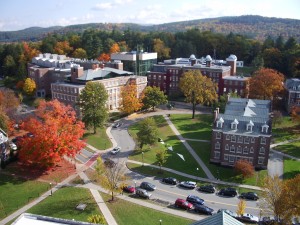
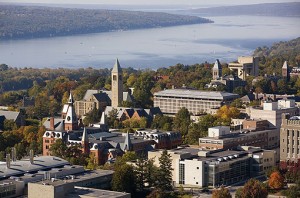
I applied to two places. Princeton and Rutgers. I auditioned separately for the music program at Mason Gross at Rutgers. I was planning to go to cantorial school after college, since I had already been leading services at my synagogue for years. But you couldn’t go to cantorial school without a college degree. It felt like four years for nothing, but I assumed I had to do it. I wanted to stay close to my job and my family near Princeton, NJ, so I didn’t even think to apply anywhere else.

I got a message from some tech people at Princeton. The application hadn’t gone through. They apologized for their glitchy system. It would be up and running in a few days. I thought that was hilarious. I told Dad, “It’s Princeton! Aren’t they supposed to be good at stuff over there?” I had been auditing classes at the university for a year or two, and I didn’t like it at all. The kids got into inane debates about the wording of the text, and they were always mentioning how their fathers worked at a big firm in the city. The professors were nice enough. The one black girl in the class looked uncomfortable, and when she spoke, everyone nodded politely and then moved on. They wouldn’t argue with her, like they did with everyone else.


“I don’t think I’ll resend it,” I said, of the lost application.

No one cared very much. Or at least they didn’t object very loudly.

And I went to Rutgers, where I learned to care a lot about these things. By the time I applied to grad school, I was pretty sure that if I didn’t get into the Ivy League, I was going to have a miserable life. I’d forgotten all about being a full-time cantor.

(source)

It’s funny, the things that people care about.


Maybe I cheated. I got into college without feeling like my life depended on it. Without pouring over school rankings and frantically trying to nudge my GPA ever slightly, slightly higher. Without missing the chance to do the things I actually cared about. I got into college with grades I may not have come close to deserving. With a pretend GPA. With an educational history that couldn’t translate into a transcript in any kind of real or meaningful way.


And despite all of that, I was academically successful in college.

The New York Times recently had a piece about how ill-prepared so many NYC high schoolers are for college. It feels ironic to me, how this is such a big issue. How a surprisingly large number of incoming college freshman can’t keep up academically in their new environment. How a surprisingly small number of high school seniors have a shot at a high ranked school. How it is just so very difficult for school to lead gracefully to college, when that seems to be the thing that school tries hardest to do.


To be fair, my mom cared a lot about my college education. She drove me to Bryn Mawr and Drew and Barnard and Rutgers and Princeton for campus tours and information sessions. She poured over college rankings and fun facts and matriculation rates. She probably knew which U.S. college campus featured the most squirrels and where students wore the highest number of Ugg boots. When I was fifteen, she took me to a fine arts’ college fair, where a representative from Pratt flipped through my portfolio and said, “We’d take you, but you’re fifteen. What are you doing here?”

Maybe we just wanted to see.


So Mom cared. But my life didn’t care. My life wasn’t geared toward college acceptance (read about how I missed the SAT the first time around). It was about doing interesting things that made me feel productive, smart, and satisfied. And nothing could convince me, after seventeen years of that, that the most important thing in the world was college.


Nothing did convince me. Except, eventually, for college itself.

(source)

*There’s more to the Clonlara process than what I’m describing. I vaguely remember having to try to count the hours I worked on a new painting for, so that I could add them to my “fine arts class” credit, or something like that. I always lost track, and my relationship with the program was extremely informal. You can read more about Clonlara here.
You have read this article alternative education / DIY Learning / homeschooling and college / kate fridkis / TIE / un-schooled.net / unschooling with the title alternative education. You can bookmark this page URL https://benncam.blogspot.com/2011/02/getting-into-college-without-going-to.html. Thanks!