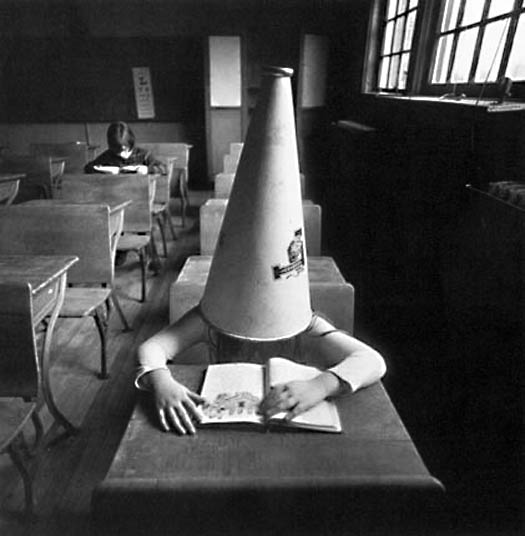
I was recently interviewed for “Class Dismissed,” the first full-length documentary devoted to exploring homeschooling as a viable alternative to the industrial school model. Class Dismissed will challenge its viewers to take a fresh look at what it means to be educated, the difference between education and schooling and speak to the many misconceptions that surround homeschooling, while offering up a radical new way of thinking about the process of education.
In this video excerpt I explain why we no longer need to go to school to learn what we need for success.
You have read this article home education /
homeschooled /
homeschooling /
unschooled /
unschooling
with the title home education. You can bookmark this page URL https://benncam.blogspot.com/2012/08/why-going-to-school-to-learn-is-no.html. Thanks!
Editor's note: The story of Jo-Anne Tracy's son who experts called ineducable, dispels many learning myths i.e. there are many lessons to learn from a dropout, you don't need a teacher or a class to learn, you don't need to know phonics to know how to read, ADD/ADHD can be a symptom of school, there's a lot you can learn by doing rather than by sitting and getting inside a classroom, and more. When she escaped the system, he was finally able to learn. I asked her to share his amazing story. Here it is.
Schools are failing many of our children. I know because they have failed my son and others like him. This happened because the system is run like a business. Children are expendable if they can not be educated cost effectively. Unions are more interested in teaching conditions and teachers benefits, than the individual children in the schools. Administrators, teachers, and legislators, educated in the past are unable to imagine the world of the future, yet they control the destiny of the students. There are better ways than our industrialized school system to care for our youth and until we begin offering such solutions, too many children will be left behind.
This is the story of how my son escaped the system and was given the freedom to learn naturally and exceed all expectations.
The “experts” diagnose my son
My son had been in his new school for only 3 months when the “experts” (a teacher, administrator, and school psychologist) told me, without any doubt in their minds, that I would be foolish to keep thinking that he had what it takes to succeed in any academic field and that he was being placed in a class where ineducable children would taught life skills and a vocation. I, his mother, who had watched him explore and investigate the world for 9 years, knew that they were wrong. However, the school system does little to honor or respect the insights of mere parents who don’t have the “credentials” necessary to properly identify “problem children” like mine. They refused to consider my input and explained they were not giving my son any other options.
When I had faced a situation with my high school-aged daughter that had caused me to question the school’s reasoning, I had been able to find an alternative school within the public school system where she could complete her graduation requirements. However, my son was in elementary school and there was no alternative program available without charge. We were struggling financially and could not afford a private school or an intense tutoring program. I had, recently, heard from my mother that she knew people who homeschooled their kids. Her comments about that situation had not been positive, but at least I knew that it was legal to not send my child to school.
Not send my child to school?
My father would have been horrified. He had dropped out of high school to fight in the war and afterwards had struggled to find a way to become a teacher. Teaching was his natural calling and I had been blessed as a child to grow up in a family where every situation had been a learning situation. However, I also knew that my son was not ineducable. He just needed time. He was diagnosed with ADD, but even with medication he found the classroom distracting. With no viable options for my son within the school, I removed him from the system.
Proving the experts wrong At first, the plan was to prove “the experts” wrong. I would spend one year teaching him to read and then, perhaps another working with him intensively to bring him to up to the academic level of his peers. The first few weeks were a blur, I had to find a way to teach him to read. Reading had been natural to my older children. They had both read fluently before entering school. I knew in my heart that my son, JAT, was just as bright, but was confused about why he could not read. I searched the internet. I went to the library and took out dozens of books about teaching reading, and at the same time let him choose books to take out. He would not take out picture storybooks. He wanted grownup books, books about geography and mountains, books about South American explorers. However, books were books and I was just happy he had chosen more books than the library would let him take. JAT had argued with the librarian and she finally relented, saying how lucky I was to have such a reader. I knew he just wanted to look at the pictures.
I was wrong.
One day about 3 weeks later, while I was writing to a reading expert, whose work I was reading, JAT came to me and asked me how they knew that Mount Everest was the highest mountain. I told him they had ways of measuring mountains and that we would search to learn more about that as soon as I finished the letter. I continued writing... then I stopped. How did he know that Mount Everest was the highest mountain? I went to find him on the couch looking at a book about Sir Edmund Hillary and his climb. There, under a picture, was a caption telling that Mount Everest was one of the highest mountains in the world. He has understood that piece of information. But yet, he could not identify the difference between the letters H and V. How was this possible?
I did not care how it happened, I knew that he could acquire information. He could reason. He was intelligent. He just did not read as schools said he should. He wanted me to read that book with him so he could learn more. Forget my research, forget my letter writing. We were going to read. And read we did. That winter, we read every book he could find about South America, the Andes Mountains, Climbing Mount Everest. Every once in a while I would bring out the math workbooks and the flash cards. He would do these grudgingly, so that we could get back to reading. I would read to him. I would leave out words and he would look at the book and figure out what it said. But, he still could not read Dolch word flash cards. He could read 4 syllable words that were important. However, the word ‘about’ was beyond him. I was beginning to see that his mind worked differently.
Some months later, when I explained to an online friend about how we were homeschooling, that I did not push math and phonics, that we just read and explored what he wanted to learn about, I was told that we were unschooling. Labeling what we were doing did not matter to me.
He was learning.
Never looking back My son never did return to school. He never expressed an interest. He read in the mornings until I returned from work about 10 am. He helped me begin a catering business and learned to make an excellent Shepherd’s Pie. At 12, he attended a local Sea Cadet program, and was selected to attend a 3 week camp, 1000 km from home.
Others worried that he would not adjust to working with a group. But, off he went with 5 other friends to this camp. I did not hear from him for days. He did call me after 2 weeks to ask me to send more spending money. He did just fine . . . No, better than fine. An adult leader at that camp told me that he had been one of the only ones who was not homesick, who did not argue about taking part in any activities. I no longer worried about socialization.
"We have to rethink what learning means. When my son has learned something, he has mastered it for life, not just for next week's test. That is knowledge." - Jo-Anne Tracey
Providing home learning options even when both parents work
We moved 3000 km away, to a remote northern Manitoba community. There were jobs there. My husband had recently lost his and we needed to move. I would need to work, at least part time. He was 13 and could spend time alone. I arranged to work split shifts. I could be home from 10:30 am - 2:45 pm. So off I went. On days I was needed to work through the day, my employer let him come and help out, stocking shelves and sit in the office discussing how to run a small business. He showed him how to repair a computer that needed a new power supply. He offered to help him build a computer if he could get the needed supplies. So, my son collected broken down computers from any source he could. Then, together my boss and my son built a computer that worked. What better computer lesson could a 13 yr old learn? This started a 16 month long passion with computers. He asked questions, learned more and soon he was fixing friends’ computers.
We were living in an apartment building at that time. The apartment manager offered him any computer he found abandoned in apartments, if he would help him out around the building. He learned to install doors and and caulk windows. He learned to patch drywall and lay tiles. He was becoming quite the handyman.
An unlikely tutor During this time, I had been offered a chance to run the store in the owner’s absence, but I would have to work full-time. I could not afford a qualified tutor, but I knew that at 14 he could not spend everyday alone in the house. He needed some social interaction. A very shy friend, a young female high school drop out offered to stay with him. She was intrigued that he could learn what he wanted when he wanted. But, she wanted ideas on what they could do, when they were bored.
I started to develop list of fun learning resources. I challenged them to learn history from songs and poems. They did. They learned about the Battle of New Orleans, thanks to Johnny Horton and they learned about the Crimean War through Tennyson’s The Charge of the Light Brigade. That was the beginning of JAT’s 'passionate about history' period. He had always been passionate about history, but now it was the focus of almost everything he did.
We were moving again. We had an offer to take over a store about 1000 miles closer to home and closer to his brother who was in university. He had to leave behind his drop-out tutor, who had discovered herself that learning could be fun. She promised that she would find a way to continue to advance her knowledge. And we were off to a new life.
Real Life Apprenticeship The position came with a house, but it needed work. The contractor asked my son to give him a hand. Together they renovated the bathroom and installed new fixtures, and my son decided that plumbing was a profession that he did not want to pursue in the future. He learned to use power tools from an expert. He learned the proper way to measure and check measurements. Somewhere along the line, he had learned enough about fractions to understand that 3/32” add to ⅜” was 15/32”. I have never determined where he learned about fractions. He had used them a bit with me when we had run our catering business, in the first years he had been at home, but he could add them and multiply them, what more could matter. He had asked questions and observed well enough that he was able to build himself bedroom furniture, including a desk and display shelves for his large Star Wars collection. He worked off and on with the contractor over the next 3 years. When we built our new store, he worked part-time with the contractor and was now proficient with tools.
Discovering life passion We were living in Canada’s richest gold mine community and where he was meeting geologists and talking about new strikes and other shop talk. This reawakened JAT’s interest in earth and geological science. He also developed a passion for space science. One day, he came to me and told me that he wanted to be a NASA planetary geologist. We discussed that it would take more than four years of university. He said he was willing to do the work. He researched and discovered he needed math including calculus, chemistry & physics. He also realized that he would need to improve his writing skills. Writing had never been easy for him, either the physical act of hold a pencil and forming letters or spelling words. However, he knew what he wanted to do and he was prepared to get it done. He was 15 and knew that his peers would be in grade 10. He had never worked much at math, other than what he used daily at home and at work. He had completed many science inquiries and experiments through the years, but had never learned any theory.
Taking ownership of learning He started with the Annenburg media video courses. He watched every one that was of interest. He watched every Nova movie and every TV show he could. We found chemistry courses online, starting with Chalkbored and MITs free courseware. He purchased an interactive physics program, complete with labs. He asked for more challenges like those I had given to him and his tutor a few years before. Together we designed more than 400 that he could choose from to show he had a well rounded education. He made a pinhole camera, studied ancient man in-depth and learned to play the flute. He studied grammar for 15 minutes a day. ALEKS, a unique online learning program allowed him to move from preAlgebra to preCalculus in just 19 months. He moved on to open courseware in Astronomy and Physics from Yale. I was learning that nothing was impossible when a student is determined.
I was still unsure about his writing skills. It was the year that he should be applying to universities, and I was concerned that he was not ready for essay writing. He had never written more than the one essay about ancient man. I suggested he take a university preparation course in essay writing. His results amazed me. This young man, who had been written off by the school system, received a 92% on his first essay. His average going into the exam was 84%, but he still faced his toughest challenge. He had to hand write his final exam. Until this point, all his written work had been completed using a keyboard and word processor. His handwriting still looked like a that of a young child. JAT could print, but not use cursive. He practiced for weeks, without improvement. He wrote to his tutor and expressed his concern. The tutor told him just to do his best. As long as he achieved 60% on the written exam, he would still get a B grade. The exam came and went. After 3 weeks the marks were available. They were very long weeks. When the day finally arrived, JAT called me excitedly. He had a final grade of 76%. Not bad, for the teen called ineducable at 9 years old by the school system.
My son was ready for university. He was also ready for life. JAT chose to remain at home and study through distance education, since the nearest university was 6 hours from home.. He wanted the support that the community, his friends and family could give him. He knows that he will have to complete his last year away from home. But he will be ready. He knows how to learn. He is not ineducable. The system was wrong. The system had failed.
Jo-Anne Tracey was a classroom mother who became a passion-led learning advocate, when the school system decided her 9 year old son did not have the ability to learn to read and write. So, the Tracey family left traditional schooling behind and became homeschoolers. After 9 years of a passion-led, unschool education, her son is now studying geoscience at university.
Jo-Anne, now advocates for passion-led learning. Recently, she created an online learning community, Discovery Portal Active Learning Community,www.discoveryportalalc.com offering homeschoolers the active learning challenge program that she designed with her son and other virtual learning opportunities.
You have read this article DIY Learning /
home education /
home schooled /
home schooling /
unschooled /
unschooling
with the title home education. You can bookmark this page URL https://benncam.blogspot.com/2011/11/mom-story-when-school-left-my-child.html. Thanks!
Guest post from Mariaemma Willis, M.S., LearningSuccess™ Institute
Home and school educators often wonder how a child's learning can be customized to meet their style needs, talents, and interests, when there are state standards and school district requirements to follow. Fortunately there are indeed ways to customize learning even when working with standards and requirements.
Focus on Modality
Suppose the course is U.S. History. At minimum you can provide the information that you are required to cover in different modalities. Non-print learners have a difficult time processing and retaining information from a text book. Many books have recorded versions available or if you are getting the information online, you can use any number of free text to speech programs. Audio books are also an option, as are videos of the books for picture learners. With the technology we have nowadays and so much being available through the internet, these options could be made available to all students.
Assignment options can also be provided to meet various modalities. Besides the traditional written report, students could create presentations using PowerPoint, Prezi, or record skits or videos. They might interview people and create a recording. They might present sketches of what they are learning or photograph an ongoing project and present like a portfolio.
Now what about assessment? We have found that one of the best strategies for both finding out what a student has learned, and for honing their skills, is to have them create their own assessments that they take as well as give to others studying this topic and even the adults who are helping them learn - it works like magic!
Explore Interests
Once you are comfortable providing for Modality needs you can go the next step. Suppose your student is interested in fashion, or medicine, or wars. It is possible to explore U.S. History through the topics: The history of fashion in the U.S., U.S. History through the Wars, etc. But that won’t cover the requirements, you say? Why not? The student can have fun exploring history through that interest and at the same time “check off” those benchmarks the rules say you must cover. The student might create his/her own book or any of the products described above, cleverly demonstrating knowledge of the required benchmarks, along with the topic he/she is exploring.
Unhampered by standards and requirements
If you are in an alternative learning situation unhampered by state requirements, then you can really customize!
In these cases students DO NOT have to follow a regimented program full of yearly requirements and credits. You can create an independent study program that meets your specific students’ needs and interests.
And, yes, the child can still go to college if that is the goal, plus there are lots of other options to explore!
Here is a sample 9th grade program of a student who is interested in the arts:
·Career Exploration
oText: Cool Careers for Dummies by Nemko
ofind an acting mentor, volunteer to assist teaching acting to younger children
·Arts
oDance, voice, piano, and acting/drama lessons
·Fitness
oDance, horseback riding, walk in morning, fitness center
·Personal Development
oLearning Success Institute Learning Style Course for Students
·World History through Dance
oChoose videos, books of interest, internet research
oCreate scrapbook, digital presentation, or video
For details on what a 4-year plan might look like visit this link
Other examples:
Students can study the history (world or U.S.) of wars, fashion, architecture, medicine, airplanes, or just about any topic of interest. History can be coordinated with literature – for example, the Dear America books are written as autobiographies and are the stories of characters growing up in a certain time period. For those who appreciate cartoons and are picture learners there are cartoon books for history and sciences.
Depending on their interests students focus on fashion, cooking, engineering, drama, the arts, and many other areas. Their programs can include internships, work experience, volunteering, or even starting a business. Skills in areas such as writing or math can be included as needed and in ways that work for their learning styles. Life skills, fitness, and financial literacy can also be included. In other words, school can really be what it was meant to be: preparation for life!
You can watch this video of a student who experienced this type of learning and is now a graduate in this video.
Mariaemma is co-author Discover Your Child’s Learning Style, and co-founder of LearningSuccess™ Institute. For the last 20 years Mariaemma’s passion has been to bring out the star in every person - adult and child. She is especially concerned about adults who have grown up with negative school labels (Learning Disabled, ADD, lazy, not working to potential, average, below average, even gifted!), and the number of children who continue to be diagnosed with learning disabilities and/or medicated.
Get your free copy of the eBook version of Midlife Crisis Begins in Kindergarten when you sign up for the Learning Success Institute newsletter here.
You have read this article DIY Learning /
education reform /
home education /
homeschooled /
homeschooling /
unschooled /
unschooling
with the title home education. You can bookmark this page URL https://benncam.blogspot.com/2011/10/personalized-learning-can-be-focused-on.html. Thanks!
Guest Post by Laurie A. Couture. This article was originally posted here and shared with permission at The Innovative Educator blog.
Maslow's Hierarchy of Human Needs (Image by Factoryjoe)
Many parents are shaking their heads at the audacity and insolence of the CNN article,What Teachers Really Want to Tell Parents by Disney-and-Oprah-endorsed teacher, Ron Clark. His article is dangerous because it represents how the majority of traditional school teachers view children, parents and teachers’ roles as authorities over children’s lives. In my post, What Teachers Really Need to Hear From Parents, I challenge Ron Clark to consider the dehumanization of children and the undermining of the parent-child bond in the institution he represents.
Most parents in industrialized societies are conditioned by their own schooling to be obedient and unquestioning of their children’s schools and the so-called authorities therein. A frightening majority of parents are unaware that most everything that traditional school teachers do is developmentally inappropriate and even harmful for youth of all ages. However, a growing movement of parents are parenting through awareness, consciousness and connection to their children’s needs. Many of these parents are opting out of public and traditional schools are are seeking refuge for their children in child-centered and democratic schools or through homeschooling and unschooling.
As a mother of an unschooling teen son, and based on the years of complaints I have heard from parents and their children about traditional schools, I have compiled a list of concerns and presented them to teachers in the context of their own education:
1. In college and Grad school,Maslow’s Hierarchy of Needs was an elementary principle that you learned. Maslow stated that if basic physical and emotional needs are not met, a child cannot properly attend to higher level functions such as learning. Yet, despite your “education”, you hurt our children’s bodies, emotions, minds and spirits every day in the name of routines, rules and “classroom management”.
Here’s how:
2. As “trained professionals”, you seem to be ignorant about the basic functioning of the human body. You deny our children their right to eat when hungry, causing their blood sugar to drop and putting them at risk for fatigue, nausea and mood instability. You deny our children their right to use the toilet when needed, causing them intense pain and desperation and putting them at risk for urinary and gastrointestinal dysfunction and damage. You deny them hydration, causing them to dehydrate and putting them at risk for headaches, mental fog, lethargy and medical problems. You deny our children physical activity at their will, causing them distress and putting them at risk for hyperactivity, challenging behavior, inability to focus and obesity, weakness and medical problems. You also act oblivious as to how preoccupying and awkward sexual development can be in a school setting for our teen boys and girls, putting them at risk for shame, distress and early sexual activity.
3. You are responsible for referring our children to the mental health system to be labeled as “learning disabled”, “mentally ill” and “special needs”. Our children are prescribed powerful chemicals that alter their natural neurological functioning and do harm to every system of their bodies. You do this rather than deal with the fact that children need touch, movement and play and are not meant to be away from their families all day or learn in the conditions you force upon them. (In 19 states, you actually legally assault our children! It is unconscionable that you have failed to learn from your Master’s-level training that violence physically and psychologically traumatizes children.)
4. Through your studies in college and Grad school you should be aware that play is the very means by which all mammal children learn. You are aware that children learned for millennia through play and community interaction and that many of our world’s greatest minds were minimally or not schooled. You also observe every day how children long and beg to play and will, at all ages, risk getting into trouble to steal a moment of play. Yet, you refuse to allow our children to do as nature drives them to do- Play, move, jump, run, climb, explore, create and have fun. You seem to take the joy out of everything you give children to do and then you punish them when they act like children.
5. You know that one of the most dreadful times of the day for parents and children is homework time. You know that our children have been cooped up all day, away from their families, homes, friends, the outdoors, our communities and their interests. Yet despite the research that indicates that homework is not beneficial for children, you make our evenings at home a nightmare by forcing our children to do reading, paperwork and projects for you. You seem callous to the tears, tantrums and distress our children suffer every night and the helplessness we feel to be able to give them the time they need to be kids.
6. You are aware from your training that there are at least seven forms of human intelligence and at least three modalities of learning. You are aware that most children, especially our boys, are kinesthetic, hands-on learners. Yet you insist upon keeping children sedentary, all doing the same work, in the same auditory, linguistic or mathematical manner. You are aware that this sets up many children, especially our boys, for failure. You view most of our boys and our children who are artistic, musical, kinesthetic, creative, athletic, introspective, extroverted, quirky or perseverant as underachievers, lazy, learning disabled, mentally ill, behavioral problems or having “ADHD”. You view their passions as “hobbies” that do not count as “academics” and you rule out seeing that their “hobbies” are often more intricately academic than anything you are “teaching”.
7. You take our children away from us. They will be children for less than two decades out of a long adulthood, but you steal those critical years from us. Our children are touch and love starved all day in school. Your academic training taught you the vital importance of parent-child attachment and how a disruption can cause psychological problems. But you disrupt the parent-child bond by infringing upon our family time, causing emotional disconnection to deepen with each year. You subordinate children, causing them to form and focus on toxic peer networks. You can do little to protect our peer-tormented children because you have set yourselves apart from children, like another species. By the time our children are in their mid-teens, they are so depressed, angry and overwhelmed with busywork, pop-culture escapes and peer expectations that society has to write books to try to convince us that “pulling away” is natural in the teen years when in fact, it is not.
8. You talk to us as if you know our children, their needs and what is best for them better than we do. We assure you, you do not! Despite learning about Maslow, Bowlby, Ainsworth, Montagu, Harlow, Gardner and others in college and Grad school and despite your own common sense observations about children, you seem to do everything opposite of what our children need. Then, you gravely misjudge and punish their distress signals and define their humanity by their behavior. You treat our children without respect, empathy, compassion or love unless they behave according to your rules and expectations. You seem oblivious to their pain, vulnerability and distress.
9. You cause so many of our most creative, spirited children to hate learning and to lose their passion, creativity, interests, motivation and their charismatic or poetic personalities. Everything you expect takes their attention away from what they were born to do. You replace that with some federal agenda to do homogenized work, pass one-dimensional tests and seamlessly usher children into taking their “place” in the economy, either as perpetual students, workers, laborers or drop outs. Children processed by your system have no time to make up all of the living they missed from preschool through high school graduation. From there on, unless they find themselves, they will have a life of perpetual work and consumption until they die.
10. Know that a growing movement is showing us that our children do not have to live this way. There are joyful, free ways for our children to learn; ways they can play, thrive and feel happy, safe and good in their own skin… Ways they can manifest lives of passion, creativity and ingenuity in their own ways… We also want you to know that you do not have to be a part of the school system. If you truly love children, you could help us raise awareness to how the education system harms children. You could work in a democratic school or become a caring mentor to children in need. If you agree with us that the system does not allow you to meet our children’s needs, then work to restore childhood back to our children.
Laurie A. Couture is an unschooling, alternative education and attachment parenting coach and consultant. She is the author of Instead of Medicating and Punishing: Healing the Causes of Our Children’s Acting-Out Behavior by Parenting and Educating the Way Nature Intended which was chosen as a finalist in the ForeWord Magazine Book-of- the-Year Awards in 2009. She appears as an expert in the documentary film, The War On Kids (2009) and is the host of The Free and Joyful Childhood Radio Show. Laurie was a recipient of the 2010 Manchester Union Leader’s Forty Under 40 honors. Visit her website at http://www.laurieacouture.com.
Further Reading: Read the conversation on my Facebook page about this topic here and here.
Read the Adventures in Learning blog reaction to this piece here.
Read learning expert Linda Dobson's reaction to Ron Clark, Oprah and Disney here.
You have read this article alternative education /
children's rights /
compulsory education /
DIY Learning /
home education /
homeschooling /
public school /
unschooling
with the title home education. You can bookmark this page URL https://benncam.blogspot.com/2011/09/what-parents-really-want-to-tell.html. Thanks!
Guest post by Home Educator, Christiel Gota Dear friends who are teachers:
This article by Ron Clark drives me to tears. I know teachers have a tough job and many are doing their very best within this system. However, I have to speak on behalf of parents when it comes to this article.
Sorry, Mr. Clark and all your minions, but I will NEVER stand against my child in support of you or the system. I will never apologize for jumping to my child's defense - and I will ALWAYS jump to my child's defense. Sorry, but I can't trust you - especially when you say my child has a behavior problem. They are no problem at home. If behavior problems only occur at school, it is YOU that is doing something wrong, not me!
And if my child fails a test or misses an assignment because of family issues or illness, it DOES matter. What doesn't matter (ever in life) is your assignments, your tests, or your grades! I do agree on one thing you said, "you shouldn't assume that because your child makes straight A's that he/she is getting a good education." The truth is that you are part of a system - a peg board that is made up of many small round holes. Your job is to take all the pegs (kids) and put them through the system the best way you can.
It's not your fault that kids come in all shapes and sizes. Your job is to smash each and every one of them through the system - even the square pegs that won't go through the round hole quietly. That's why parents and teachers clash. Because we won't put your system above the well-being of our square pegs or oval pegs or star-shaped pegs.
Not all teachers feel this way, either. My best friend is a public school teacher and would not agree with Clark in this article. She is in the system, but not of the system. She knows that a good education is child-centric, not system-centric. Teachers like her who understand this are a rare and precious gem in this crazy system.
Anyone who would defend the system at the price of driving a wedge between the parent/child bond is NOT TO BE TRUSTED! The healthy, natural parent/child bond being assaulted by mechanisms of the system, like Zero Tolerance, standardization, etc. is the real and true problem - not the students or their parents. As long as this system exists, teachers and parents will always be "frenemies.
I felt the need to respond because it really doesn't have to be this way! Parents never have to abdicate their judgement or authority to teachers, especially when it potentially causes damage to the mind and heart of their child! It's what I always tell parents - especially those facing issues with their child at school - your child shouldn't just survive their education, they should thrive in their education. Anything less can and SHOULD be challenged!
------------------------------------------------ Christeil Gota is mother of 4 boys and unschooling in California. The family is happily embarking on their 4th year of home education, following their passions and playing.
Read more: Learning expert Linda Dobson also takes issue with Ron Clark and Oprah and Disney. Read her article here.
You have read this article DIY Learning /
education reform /
home education /
home schooled /
home schooling /
unschooled /
unschooling
with the title home education. You can bookmark this page URL https://benncam.blogspot.com/2011/09/parents-take-issue-with-advice-of.html. Thanks!
Editor’s Note: I have learned a lot about learning from the home education community in general and the unschooling community in particular. The following post was written upon my inquiry to Mystified Mom, a life-long learning and home education expert, about how unschooling principles could be applied in the classroom. Below she shares one of her smart ideas. Guest post by Mystified Mom When Lisa asked me how unschooling principles could be applied in the classroom, I drew a blank for the longest time because what we do is based on freedom. A lot of our learning results from being able to be immersed in the things that we are interested in. I have been thinking about how things are done in the elementary school. Right now, teachers typically create lesson plans that focus on what they are going to do in each subject every day of the week. The blocks of time are typically about an hour. When I was in the classroom, I found it difficult to break learning down into such short periods of time. There is transition time between each subject and a lot of times it can be rather jarring to have to switch from doing math to doing English. I know that my girls are not good with big transitions. So, what I propose is to break things down by day. For example, plan to spend all day Monday focusing on math. It would give teachers a lot more freedom to do fun stuff. It would also give them more freedom in the lesson planning process because they would have an entry for each day of the week rather than multiple entries every single day.
I am thinking that a day of math might start with talking about what is going to be covered for the day. I think one of the elements missing in current lesson plans is “How this is relevant to the student NOW.” Sure, teachers need to meet state standards but I think the missing piece is that nobody is telling kids how this information is relevant NOW. Why do they need to learn how to add and subtract? That seems pretty obvious to an adult but it is not always obvious to a kid. I know that my girls have asked why they need to know some things. I am thinking that if more kids understood the WHY behind learning some concepts, they would be more motivated to learn.
I wrote a post aboutandragogy on my blog and one of the things that it emphasizes is that learning is best when people have a purpose for learning. People learn best when they understand why they need to learn it. For addition and subtraction, kids could be invited to brainstorm real world applications of it. Teachers could add to that. The way classes are set up now, there isn't enough time for real brainstorming. Everything has to be cut short to meet time requirements to go on to the next subject. I vividly remember getting in trouble for letting a lesson go on too long when I was doing my student teaching. The kids and I were really interested and really engaged in the topic and I lost track of time. My supervising teacher had to remind me that I had to get all of this other stuff done in the same day. She reminded me of how important it was to pay attention to time. I hated having to keep an eye on the clock the whole day.
Devoting one day to one subject would allow for more immersion and engagement. I know that my girls learn best when they are allowed to completely immerse themselves in a topic. At the beginning of the day, the teacher can set up all of the activities for the day and gather all of the materials. I remember that prepping for the day was sometimes a challenge because there were so many subjects and so many divergent things going on. One prep per day would make life so much easier for the teacher and I think it would be easier on the students as well.
I remember using centers a lot when I was in the classroom. We set up little stations where kids could use manipulatives to explore the concepts being introduced. It seemed like I had to cut the students off before they ever had a chance to really explore and play with the manipulatives. I remember one of the lessons was to go outside and find things in nature. It was a cool lesson but it seemed that the kids had to be rushed. There were a few kids that always finished things early but there were just as many that needed lots more time to accomplish things. The kids that finish early can be allowed to go on to the next activity while the teacher helps the stragglers. I think it would also allow more time for peer coaching. The kids that finish early could be encouraged to help their classmates.
I think this would also be a great way to give kids that want to advance more room to advance. I am thinking of how things work in our house. A lot of times there will be multiple things going on at once. If the teacher is planning for a day of math, then extension activities could be built in to the day. Usually, there isn’t enough time to build optional extension activities into the lessons. Extension activities could be as simple as having board games, higher level books, or other activities that could be pursued individually by students that finish early and want to advance.
I think it would also give teacher more flexibility to help students that need more one on one assistance. If there are a variety of activities set up about one particular subject, kids can be doing one activity while the teacher is helping another. If there is a small group of students that need more assistance, there would be fun stuff to do related to the subject. I know that the biggest problem when I was teaching was that some students would finish before other students would even get started. That made it difficult to help those that needed help because I was trying to find a way to keep everyone engaged. Having a variety of activities for students to work on through out the day that focus on one subject while still addressing state standards, would give the teacher a lot more flexibility because those that don’t need help can be involved in self-directed activities.
This is a start in providing one way to give teachers and students more freedom in the classroom that allows kids to completely immerse themselves in a subject and increase learning.
-------------------------------------------------------------------------------- About Mystified Mom I am passionate about learning. I have four beautiful daughters (10, 7, 4, & 2) and I am married to my best friend. We live a lifestyle of learning, which means that learning is a part of everything that we do. As somebody that is always learning and always seeking new ideas and perspectives, I am not tied to any one method of learning. My goal is to examine my life and the world around me so that I may grow as a mother, wife, and human being. I am very interested in child advocacy, especially as it relates to the rights of children.
You have read this article DIY Learning /
education reform /
home education /
home schooling /
homeschooled /
unschooled /
unschooling
with the title home education. You can bookmark this page URL https://benncam.blogspot.com/2011/09/rethinking-teaching-and-time-allocation.html. Thanks!
Eva is a self-published, touring author of two books. She has sold over 100 copies. She has her own website, and she lectures about the craft of writing. Eva is my 8-year-old daughter who was given the freedom to begin developing these amazing talents two years ago when our family left school and began to home educate. She, along with my 11-year-old son, are members of a family that studies traditional subjects, such as history and math, and also devotes a large portion of our time toward creative endeavors.
It seems everywhere I look lately, teachers and parents are increasingly dissatisfied with the one-size-fits-all approach of public education. Many feel that our nation’s fixation on standardized testing is ruining the prospects of our country’s young minds. While there are many ways to approach this issue (I am prone to rant about policy changes, the inefficiencies of differentiated instruction, and the pathetic wages and support we provide our teachers), I think there is a lot to learn from my experience with my daughter.
I believe that nurturing one’s creativity, passions, and problem solving skills is the most important piece of education, and I was determined that my children would have ample opportunities to do so. Eva has always been a storyteller and an avid reader. So when she was six, I decided to let her “reading class” be devoted to telling a whole story, from beginning to end.
We used the online resource National Novel Writing Month, and I printed out their free workbook that helps kids think about characters, setting, and plot. When I gave it to Eva, she accepted it as a treasured gift. We used it sometimes in “class,” but mostly she used it on her own, jotting down notes and drawing pictures of her characters. In October of that year, I sat down with her and a notebook. Because she was still learning how to hold a pencil, I told her that for this exercise I would be her hands as she dictated to me. I asked her questions about her story, and over the month she created her framework and I jotted it down as an outline.
The challenge of NaNoWriMo is to write a book in 30 days. Eva and I set her word count goal at 2,000 words, or five or six sentences each day. Some days she would dictate 20 sentences, faster than I could type them, and some days we’d do nothing. We kept an eye on the calendar, but paced ourselves. In 30 days, she had a complete story.
Lots of kids write wonderful stories, but they are stuck in notebooks and stuffed away in drawers and boxes. I wanted Eva to experience being a writer as something special. So I printed out her story and had her read it out loud, several times. She identified a lot of her own errors, and I taught her about verb tense and punctuation. She made all of her own corrections.
Then she illustrated it. This took a couple of months, and there were many times that she wanted to quit. But we stuck with it, and eventually she had her pictures ready for scanning. I put them into her book and then sent it off to a self publishing website. By April, Eva held her very own hard-cover picture book. She was thrilled. That day she said to me, “Mom, I used to want to be a princess. But now I want to be an author!”
The next year she doubled her word count and produced a beautiful chapter book. We promoted her books to friends and family, and created this website so she could share her work. The release of her second book coincided with the publication of my husband’s first novel. So this summer, our family drove across the country, and the two of them did book signings together. I watched this formerly shy princess morph into a confident novelist and salesperson.
When we returned from the tour, she was on fire. She wanted to inspire other kids to write books too. So we devoted the month of August to “creative homeschooling.” Both kids had to clock in a certain number of hours per day for school, but their work would be creative endeavors. Eva and I co-wrote a series of five, two-minute lectures, in which Eva talks about the craft of writing using her own experiences. We filmed and illustrated the videos, and uploaded them to her website. Check them out here if you have a minute, and then help her pursue her dream by sharing them with teachers, parents, and kids.
In public school, we give kids punctuation worksheets. Eva learns it by editing her own story. Public school kids receive spelling lists each week; Eva learns it by writing and revising her own work. In art class, we teach kids to draw by copying a picture. Eva explores drawing by illustrating her own characters. In reading class, kids read texts and complete worksheets on characters, setting, and plot. Eva has mastered these concepts by creating them and teaching about them.
Kids learn by doing. By actively pursuing her writing as a career, Eva has learned all the standard lessons of “reading” class, as well as lessons on public speaking, publishing and promotion, accounting skills and profit margins. She now sees herself as an accomplished author who has a lot to offer back to the world. These things can’t be taught in a textbook, and can’t be measured by standardized tests. It’s tragic, but if she had stayed in public school, she would have never had the time to find these dreams.
I don’t have all the answers about how to bring this kind of individualized, project-based learning into the public schools. But I do know that our nation’s continued commitment to standardized testing and insistence that teachers follow a pre-set curriculum is misguided. It’s time to focus on kids as individuals instead of assembly line products, and to give them the tools they need to be successful, happy adults.
----------------------------------------------------- Gwyn is a late-30′s wife and mom, environmentalist, advocate of quality education with an emphasis on gifted kids, vegetarian, artist, and a lover of books, a glass of red wine, watching birds and growing things. By trade, she is a children's librarian and a homeschooler. You can find Gwyn at gwynridenhour@wordpress.com.
You have read this article DIY Learning /
education reform /
home education /
homeschooled /
homeschooling /
literacy /
Literacy and Technology /
unschooled /
unschooling
with the title home education. You can bookmark this page URL https://benncam.blogspot.com/2011/09/education-reform-lessons-from-8-year.html. Thanks!