Showing posts with label the innovative educator. Show all posts

If You Give Kids Free Time, Won't They Get Lazy?

Kate Fridkis blogs about education at Un-schooled and life as a young woman at Eat the Damn Cake.


A lot of people think that if you have too much free time, you’ll get lazy. You’ll spend it scrolling through shows on Hulu. You’ll read Yahoo articles with titles like “Are single women really ten times more desperate than single men?” all day. They think there’s a big risk that if you give kids, who aren’t responsible because they’re too young to be, a lot of freedom, they’ll never learn anything. They’ll never focus. They’ll just get on their iphones and text or gchat or ichat or whatever.
In fact, we’re pretty concerned about focus as a nation, these days. We have all these distracting devices. We are always plugged in. We’re multitasking and the neurologists are telling us it’s bad and that kids can’t learn that way and neither can grownups.

Focus wasn’t an issue for me, growing up. I was trying to explain this to my husband, Bear, the other day. We were talking about homeschooling (I mean, who doesn’t talk about homeschooling all the time?), and he was saying something about how he would’ve just watched TV instead of doing anything, or something to that effect. It wasn’t exactly the first time I’d heard that. Or, like, the three-thousandth time (No offense, honey!).

Kids are naturally interested in the world. Have you ever been around a baby? It’s fascinated by EVERYTHING. Learning to be bored is an incredible feat when you think about how intrinsically interested humans are, and how intriguing the world is. When you think about how much children love to engage with the world around them, and how they make everything into exciting games, it’s hard to explain laziness.

I think laziness and boredom happen when learning and play get bifurcated. When work and fun become dichotomous. When kids are taught, day after long day, that learning is something that happens in school, and it’s going to be boring. And that “free time” means the time that doesn’t involve learning. In fact, free time is all about recovering from learning.

When kids learn this lesson, they become a little bit more prepared for an adult life full of jobs that rely on weekends for recuperation. Work that is balanced by partying to relieve tension. Work that is really always about something other than work. About waiting for work to end. About making enough money to stop working.

For me, as an unschooled kid, it was hard to be lazy. Doing nothing doesn’t give you very much pleasure if you haven’t earned it by working hard. Doing nothing is, on its own, meaningless. It’s unfulfilling. It’s incredibly boring. I loved to create things. Paintings, sketches, stories, poems, songs, plays, outfits, tuna salad with a lot of weird additions. For fun, my friends and I created things. We wrote stories together. We dressed up and acted them out. We directed and acted in plays. We wrote songs and sang them over and over. We painted each other and photographed each other.

It sounds really dorky or something, putting it like that. Because dorkiness is a function of school, too, of course. Being a nerd or a dork is when you want to keep doing things that involve learning, for fun. In your free time.


(I took these pictures of my friend Emily, when we were sixteen or so. I still love them. She is the cutest.)

I was trying to explain to Bear– I didn’t know what laziness was. I didn’t know what it meant not to focus. I wanted to feel good about myself. I wanted to enjoy myself. I wanted the same things that everyone wants. So I worked, and learned. Because that is what you do to feel fulfilled and happy when no one has taught you that working and learning are dull and nerdy and lame.

If someone had given me the option of watching TV all day or working on the book I was writing, it wouldn’t have even sounded like a real question to me. Why would I want to watch TV when I could do something interesting? I mean, of course TV can be fun, and I love some shows, but all day? I’d hate myself! I’d be a boring person!

I’m a little addicted to my phone these days. And I am a strong believer that technology isn’t the enemy if you use it to do productive things. Blackberries and gchating and laptops make work so much easier. Technology only becomes “bad” for kids when they only use it to distract themselves from whatever else they might be doing. When they don’t recognize that it should be incorporated into their schooling as well as their socializing. When socializing and learning are two totally separate things already.
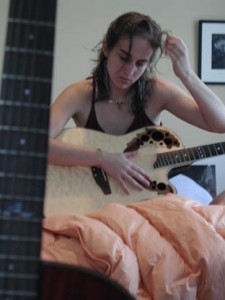
(Emily took this picture of me)

My work is mostly online. I’m always waiting to hear back from a magazine about how awful my latest submission was, or how maybe it was OK and they’ll think about publishing it. I’m getting letters from people who read my blog, or read an article I wrote, telling me that they feel a lot better or a lot worse, thanks to me. I’m sending another query and coordinating a project. Technology keeps me focused on my work, and my work isn’t separate from what I love to do. Sometimes, though, Bear removes the laptop from my hands and sets it down a safe distance away.

“That’s enough,” he says. He confiscates my phone, too. “Pay attention to ME now.”
You have read this article alternative education / attention span and eduction / focus and education / kate fridkis / the innovative educator / un-schooled.net / un-schooling with the title the innovative educator. You can bookmark this page URL https://benncam.blogspot.com/2011/02/if-you-give-kids-free-time-won-they-get.html. Thanks!


But How Will Kids Know? – Learning with out Testing

Kate Fridkis blogs at Un-schooled and Eat the Damn Cake.

People ask me how kids will know how good they are at something without tests. It’s a question I get a lot. Possibly because I go through life saying things like, “Can you believe how many tests kids have to take? How much better would the world be if they were drinking milkshakes instead?”

Milkshakes are so good.

OK, I don’t really think kids should drink milkshakes ALL the time. But I think they’d be better off drinking them than taking tests. Especially if they are chocolate peanut butter milkshakes.

I’m a little sad right now, because my mom just gave me this huge lecture about how I need to stop drinking so much diet soda, because it’s definitely going to kill me. I don’t remember why. Calcium was involved. Maybe my bones are going to turn to dust really soon. And diet soda was my healthiest option, since water tastes completely boring to me. She doesn’t know how close I am to drinking milkshakes all the time.
(Vanilla peanut butter is pretty amazing, too. Source)

But that’s not the point.

People explain to me how important tests are, for the kids. They emphasize that part. For the kids. You know, rather than for the maniacal pleasure of power-drunk adults who think tests are hilarious? Pick C., sucker! Fill in the C bubble on #29! You know you want to! DOO IT!!!!!!!! Actually, they mean rather than for maintaining the balance of society, which, they are pretty sure, tests are also good at.

I love the question about kids and tests. Because it’s really easy to answer. Which makes me feel smart.

I say, “Do you take tests?”

They say, “Not anymore,” and smile like, “You’ve got to be kidding…”

I say, “Are you great at everything you do?”

They say, “Um…No. Obviously.” And laugh uncomfortably.

I say, “How do you know?”

Here’s what I think kids should do instead of taking tests AND drinking milkshakes: They should work on real projects. What I mean by “real” is something that has an impact on a larger world than the classroom, the teacher, or a grade. This can mean things like a brief apprenticeship with a chosen expert (it’s amazing how willing and excited adults are to accept apprentices. Everyone loves to feel that they’re doing something important enough to teach), starting a little business, or putting together an art show that will have an opening, with everyone in the community invited. It can mean a huge number of things.

Interesting things happen when kids undertake real projects. They have specific real-life models for success to emulate, they feel very responsible for their participation and production, since other people will be impacted by it, their work is often fluid, so that when they do something wrong, they can correct it without that mistake defining the outcome of the entire project. They learn skills that apply to the real world, and they often actually learn them, rather than memorizing and forgetting, because they HAVE to learn them. Just memorizing how to lay a floor or coordinate topics on a newspaper page isn’t enough. And it doesn’t really work that way in any case. Because these skills are much more comprehensive than the sets of often disconnected facts that tests require students to hold briefly in their heads.

I took a lot of tests in college. I barely remember a thing I was supposed to have learned. I apprenticed with a local artist when I was fourteen, and I remember everything she said about light, because after she said those things, I had to teach them to a class of young children. And I had to demonstrate them myself, with paint.

I spent a day as a photographer’s assistant, and I learned immediately how bad I was at standing for hours on end, and how uncomfortable I was with answering the phone for his studio. I also didn’t like hauling the garbage out back and having to order lunch for everyone. He was taking photos of dogs in giant pink satin ribbon collars, their proud owners dipping in to fluff them and hovering anxiously on the margins. I learned so much about myself that day, and I never went back. I knew exactly how bad I’d been at practically everything that happened in that environment, and while I also knew that I was interested in photography, it was clearly not the right place to learn more.

It’s really, really easy to tell when you aren’t doing something well. But that information doesn’t always cause you to want to get better. It depends what the subject is. What the project is. What the reward might be. When the reward is another good grade and a higher GPA, it’s easy for students to get good at tests without having to deal very often with how good they are at doing things in the world. And when your world is about doing well on tests, what happens when you find yourself doing something totally different? Something that requires real mastery of a subject or practical thinking or creativity? You might figure out just how to handle the situation. Or you might not know how to fail and keep going until you get it right. You might not realize what a big deal it is to be responsible for other people. you might not have learned how good you are at… life.

(I followed this dragonfly around a stream bed for an hour or more before I finally got this shot. I took a lot of terrible pictures first. And I didn’t have to answer any phones at all.)
You have read this article 21st Century Education / alternative education / apprenticeship / DIY Learning / kate fridkis / testing / the innovative educator / un-schooled / un-schooling / unschooling with the title the innovative educator. You can bookmark this page URL https://benncam.blogspot.com/2011/01/but-how-will-kids-know-learning-with.html. Thanks!

The Story of How I Learned How To Read and Write Without School


Kate Fridkis writes about being a young woman at Eat the Damn Cake and alternative education at Un-schooled.

This is going to be shocking, so please hold on to something steady: kids learn at different paces.

Wait, there’s more…They learn from doing things, rather than just being told about how to do things. And here’s the most terrifying, overwhelming part: they don’t really need to be “taught.”

The Innovative Educator writes about how problematic standardized reading tests are. They fail to measure how well a student will be able to read (which is usually quite well, given some time and support), and instead place enormous amounts of pressure on students to be at the same level as their peers, even when we have plenty of information about how the factors that influence when students will begin to read fluently have nothing to do with the classroom.

And what about writing? Lisa worries that too much emphasis is being placed on formalized written communication. She suggests that writing doesn’t feel relevant for students, because their projects stay within the classroom, rather than relating to the world outside it. They could be writing blogs and columns and letters to the editor. But they write essays that begin with a thesis statement, are followed with two points in defense of the thesis, then a counterpoint, a summary, and a neat conclusion.

She asked me how I learned to write. Which is something I remember much better than I remember a lot of things that happened that long ago.

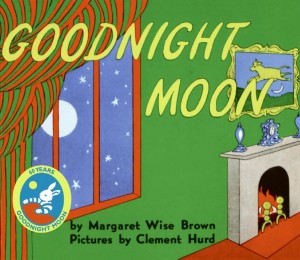
But first, this is how I learned to read: my parents read to me. All the time.
(My dad was a pro at reading this one. source)

Books were exciting and mysterious and magical. I don’t know a single unschooled kid who didn’t learn to love reading. We learned at different ages, of course, but no one had to take a test, and so no one got left behind.

Teachers are sometimes amazed to learn that a kid who started reading at four and a kid who started learning at twelve will read with the same fluency at thirteen.

As the founder and leader of The Manhattan Free School, Pat Werner recently explained to a group of educators, kids never stop learning. They are learning all along. They don’t “learn to read” the moment when they pick up a book and can sound out the words. They’ve been processing relevant information since they were born, and that moment is only the moment when the information begins to fit together in a way others can plainly observe and categorize.

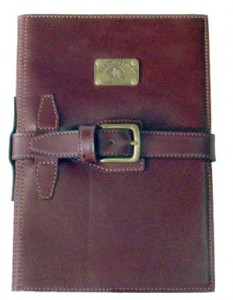
My mother worked with me, showing me how to shape letters with my pen. And then she gave me a journal. Every day, from the time I turned seven or so, I wrote a sentence or two in my journal. I wrote about my life. What toys I wanted for the next big holiday. Why my brother had hurt my feelings. How much it was snowing. How much I enjoyed going to the Sam’s Club because of the free snacks they gave out. Lots of scintillating, forbidden, and provocative pieces about my secret desire for more ice cream. The subject matter wasn’t the point– what was important was my connection to it.
(I always wanted one that looked like this. source)

Later, when I was nine or so, I wrote stories about stories. Stories inspired by the books we were reading together and I was reading on my own. And I illustrated those stories. There aren’t very many stories from that time in my life that aren’t accompanied by marker and colored pencil sketches of princesses in gowns speckled with fat pearls. I don’t know why, but they always had pearls on their dresses. I think that meant they were really rich.

It seems like I shouldn’t have any concept of grammar. Mom used to sit me down with a purple grammar book, and one with a picture of an owl on the cover. I memorized a string of prepositions once. But we weren’t thorough. And we didn’t need to be. I already knew how to write in complete sentences. Grammar was memorization. It was meaningless. Writing was expression. It was natural.

I learned grammar from every book I read, from the way my parents spoke, from Mom reading over what I wrote and saying, “Why does this sound wrong? What would you change to make it sound right?” Grammar is what sounds right. You know how words fit together when you read for hours every day. You also get pretty good at punctuating.

My very smart schooled friends sometimes make grammar jokes that I don’t get. They reference past participles, dangling modifiers, and synecdoches. I put in a polite laugh and nod to show that I’m educated. And then when I write something that doesn’t seem right I read it aloud. How does it sound?

My grammar isn’t perfect. But not a single college professor has ever had a problem with it. Freshman year, one of them even nominated me for a writing fellowship.

It sounds too simple. How can people learn things if they aren’t taught the proper way? If information isn’t broken down for them into bite-sized, manageable little chunks? It’s almost like magic, and no one seems willing to believe in it. No one seems willing to believe in how much children are capable of learning and doing when they’re permitted to exist in a world where everything is interconnected.

As a kid, everything I wrote was related to my life. Everything I wrote was part of something bigger. It was never an isolated essay, it was part of a collection; a journal, an illustrated fairytale about a larger fairytale with much sturdier binding and better cover design.
Writing was connected to drawing which was connected to reading which was connected to experiencing the world which was connected to fairy princesses. The world could not be separated from writing the world. Even now, I want to write about all of the interesting things I read. Luckily, I no longer have the urge to draw princesses in pearled gowns in the margins.

So Lisa, I hope that helps answer your question.
(source)
You have read this article child development / home-schooling / kate fridkis / learning how to read / the innovative educator / un-schooled.net with the title the innovative educator. You can bookmark this page URL https://benncam.blogspot.com/2011/01/the-story-of-how-i-learned-how-to-read.html. Thanks!

Happy Birthday to The Innovative Educator

Happy Birthday to The Innovative Educator! You are two years old today.

It was exactly two years ago that The Innovative Educator took its first step in an effort to publicly become a part of the conversation on educating innovatively. As I shared in my post Why I started a blog and why maybe you should too, this blog was born in great part due to the prodding of blogevangelist Will Richardson who I have since named my Blogfather. It was Will who I would run into at events and conferences who would ask, “Have you started sharing your ideas yet on a blog?” and who would write, “if you want your ideas to resonate with me and to be taken seriously, don’t just talk. Engage. Publish. Converse.”

I took his advice and like any proud parent, I can say I’ve learned so much from the experience of giving birth to this new creation that has developed a purposeful and professional digital footprint consisting of 268 entries. Now, when I'm Googled, it is me, not one of 1000s of others, who comes up on the front page. And, there are all sorts of other important footprints that The Innovative Educator has made. Its print is left on the front page of Google searches like: Educating Innovatively, cell phones in education, technology education quotes, teaching in the 21st century ideas, personal learning network, Renzulli learning to differentiate instruction, and more.

I’ve watched my baby blog grow from no readers to an average of 125 a day last year and 336 a day this year. There have even been a few times when The Innovative Educator has received significant international attention. Last year, during the Inauguration she received more than 6,000 hits a day from people interested in teaching the inauguration in innovative ways. This year thousands of visitors flocked to the blog to read a number of popular posts. Among the most popular were
I also want to thank The Innovative Educator for the opportunities it has brought me. Because of you I now contribute to the popular educational magazines Leading and Learning and Tech & Learning. I also have a book in the works about "Teaching Generation Text" and your success has enabled me to present keynote presentations on ways to educate innovatively and serve on panels at conferences like Tech Forum and the 140 Character Conference.

You also now have Authority! Growing from being just one of millions of blogs to gaining a credible 544 authority rating on Technorati. But, even before anybody was reading The Innovative Educator, you enriched my life with opportunities to practice my writing skills and articulate and develop my thoughts.

The Innovative Educator has helped me understand the power of influence and given me an outlet to share with my readers about what I love most – “Educating Innovatively!” So, happy second birthday… and many more!
You have read this article happy birthday / the innovative educator with the title the innovative educator. You can bookmark this page URL https://benncam.blogspot.com/2010/03/happy-birthday-to-innovative-educator.html. Thanks!